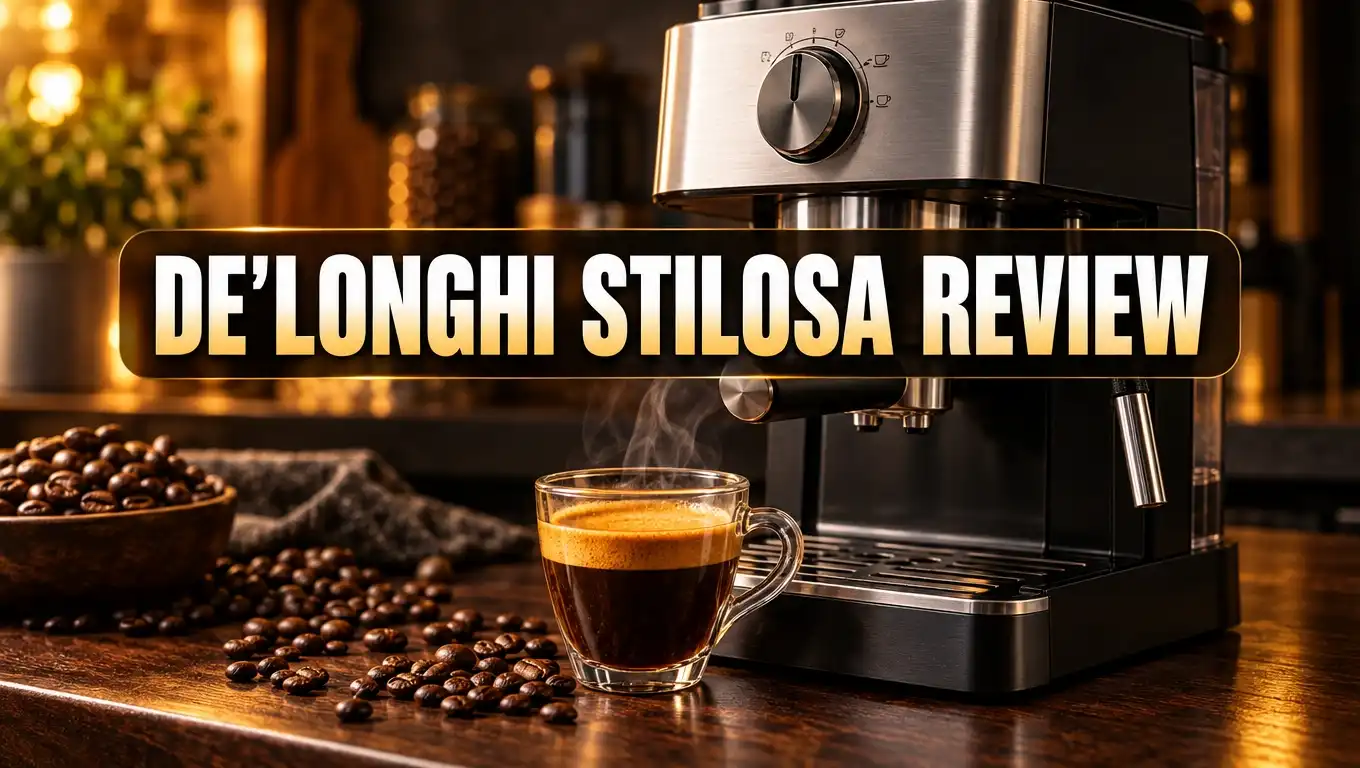
De’Longhi Stilosa Review: Is This Budget Espresso Maker Worth Buying?
Dreaming of a café cup at home? The De’Longhi Stilosa could be the machine you need. It makes rich espresso shots with a simple setup.
It works well for beginners. It also fits neatly on small counters. Many people use it every morning without any fuss.
Inside, you get a boiler for steady temperatures. A steam wand lets you froth milk for lattes and cappuccinos. A hot water dispenser adds more options to your routine.
In this review, we look at what the Stilosa does well. We also cover where it falls short. Our goal is simple. We want you to make a smart choice for your kitchen.
In a Nutshell
- Compact size: The Stilosa fits small kitchens and crowded counters with ease. Its slim frame leaves room for other appliances, mugs, and daily clutter.
- One cup at a time: It brews a single drink per run. This suits quiet solo mornings, when you want one good coffee without making a full pot.
- Hands on process: You control each shot from start to finish. You learn how grind size and tamping change the taste of your cup.
- Milk options: A steam wand with a 360 degree nozzle and a manual frother help you make lattes and cappuccinos. You can also use the hot water dispenser for tea or Americanos.
- Build concerns: Some reviewers question the plastic body, and a few users notice espresso dripping from the edges of the filter holder. Check the build in person before you decide.
- Timing matters: One user reports watery shots when extraction runs past 22 seconds. Keep an eye on the clock, and stop the shot in time for a richer flavor.
Build Quality and Materials

- Includes Portafilter, measuring scoop/tamper and two filters for single or double espresso
- Stainless steel boiler is engineered to last long and work for years

Last update on 2026-11-26 / Affiliate links / Images from Amazon Product Advertising API
The build of a coffee machine shapes how it feels every single day. Many people use their espresso maker each morning, so the materials must handle regular use. The De’Longhi Stilosa uses a lightweight body that moves easily between shelves, sinks, and counters.
Weight brings both benefits and drawbacks. A lighter machine is simple to lift and store, yet it can shift slightly during a firm tamp. Place it on a flat, steady surface to keep it stable.
Before you buy, hold the machine if you can. Check the water tank, the buttons, and the lid. Parts that feel secure in your hand often suggest better long term wear.
The handle and filter holder take the most stress. Each shot requires you to lock the holder into place and twist it. Check the fit before brewing, and make sure the parts sit straight. Forcing a crooked holder can wear down the connection over time.
Plastic surfaces need gentle care. Wipe the outside with a soft cloth and mild soap. Harsh scouring pads can leave fine scratches, and those marks make the body look dull after months of use.
Heat also plays a role. Warm steam and hot water pass through the machine during every session. Keep the area around the top clear of paper and towels, so air can flow freely and the surface stays safe to touch.
Daily cleaning protects the internal parts too. Empty the drip tray after each use and rinse the filter holder. Descale the machine on a regular schedule, which stops mineral buildup from slowing water flow and stressing the internal components.
Overall, the Stilosa suits home users who want a simple, compact machine. It may not feel as solid as heavier models with a full metal frame. With careful handling and routine maintenance, it can serve well for many years.
Espresso Shot Performance
The shot is where the Stilosa proves its worth. Its 15 bar pump pushes hot water through the coffee grounds. That pressure gives espresso its body and deep flavor.
Most of the result depends on you. The grind size sets the pace of each shot. A fine grind slows the flow, while a coarse grind rushes through and tastes thin.
Dose matters too. Add enough coffee to fill the basket evenly. Then press it down with a firm, level tamp. Uneven grounds often lead to weak or sour shots.
Fresh beans make a clear difference. Beans roasted within the last few weeks release more aroma. Store them in an airtight container away from heat and light.
Timing is part of the process as well. Watch the first drops as they fall. A steady, thin stream that looks smooth usually signals a good flow rate.
The shot should look good too. A healthy layer of golden crema sits on top. Pale or missing crema often points to older coffee or a grind that is too coarse.
Warm up habits matter. Run a short flush before brewing to prepare the group head. This simple step helps your next shot stay consistent, especially on cool mornings.
Watch the cup volume. A standard double shot yields a small, concentrated drink. Use a measuring cup or a scale for the first few days so you can repeat your favorite results.
Many users report solid results once they settle in. Early shots may taste off. Keep adjusting the grind and dose until the flavor feels balanced. Each small change teaches you something new.
Consistency comes with practice. Keep a simple note of your grind setting, dose, and taste. Over time, you will learn exactly how the Stilosa likes to brew.
Steam Wand and Milk Frothing
Steam is where many home cooks feel the most nerves. The Stilosa gives you a steam wand for heating and texturing milk. Practice makes this step much easier.
Start with cold milk. Fill the pitcher about one third full. Cold milk gives you more time to build foam before it overheats.
Purge the wand before you start. Turn the steam knob for a second or two. This clears water that collects inside the wand.
Place the tip just below the milk surface. Listen for a gentle hissing sound. This stage adds air and increases the volume.
Once the milk swells, lower the pitcher slightly. Angle it so the milk spins in a whirlpool. This blends the foam into smooth microfoam.
Stop steaming when the pitcher feels warm, not hot. Aim for about 60 to 65 degrees Celsius. Milk that gets too hot tastes flat and loses its sweetness.
Some owners find the froth looks dark or arrives slowly. Watch the colour closely. If the milk turns brown, stop steaming sooner.
Wipe the wand right after each use. Dried milk clogs the small holes quickly. Use a damp cloth while the wand is still warm.
Tap the pitcher on the counter after steaming. This pops large bubbles and gives the milk a glossy look. Swirl gently before you pour.
Practice with plain milk first. Small changes in depth or angle change the texture a lot. Patience helps you find your own rhythm.
Milk type also matters. Whole milk creates thick, creamy foam that holds its shape. Oat milk foams well too, but it may need a little more time.
Clean milk jugs matter too. Residue from old milk can change the taste of fresh foam. Rinse the pitcher with warm water after every session.
Good technique turns a simple machine into a useful tool. Your morning latte can taste smooth and sweet with a little care.
Top 3 Alternatives
Breville Bambino

- MICROFOAM MILK TEXTURING: Cappuccino maker and latte machine has an automatic steam wand allowing you to...
- FASTER HEAT UP TIME: Espresso maker includes innovative ThermoJet heating system that achieves optimum...
Last update on 2026-11-26 / Affiliate links / Images from Amazon Product Advertising API
The Breville Bambino is a strong pick for home users who want fast results. It heats up in about three seconds, so you can start brewing sooner.
Its steam wand creates smooth milk foam with ease. Beginners also like the simple controls and compact body.
Anyone who makes one or two lattes each morning will enjoy this machine. It fits neatly on most counters and feels friendly from day one.
Gaggia Classic Pro

- Solid Steel Housing, Made in Italy
- 9 Bar Espresso Extractions
Last update on 2026-11-26 / Affiliate links / Images from Amazon Product Advertising API
The Gaggia Classic Pro suits people who enjoy a traditional brewing style. It has a sturdy metal body and a commercial style portafilter.
Many home baristas praise its rich espresso and thick crema. Fans of classic Italian espresso often choose this model for their daily routine.
It takes a little practice to master, but the results can be very rewarding. Learning each step makes every cup feel more personal.
De’Longhi Dedica

- CRAFT HOT & ICED ESPRESSO DRINKS & COLD BREW With three preset recipes - Espresso, Double Espresso and...
- OPTIMAL EXTRACTION Get café-quality results every time with our professional pump that delivers expertly...
Last update on 2026-11-26 / Affiliate links / Images from Amazon Product Advertising API
The De’Longhi Dedica is slim and fits well in small kitchens. It heats up quickly and is easy to use every day.
Its compact footprint makes it a smart choice for tight counter space.
Users who want a stylish machine for daily coffee often pick this model. It keeps the process simple without losing quality. Small kitchens and busy mornings both feel easier with this machine.
Ease of Use and Cleaning
Setup is simple on day one. Take the machine out of the box and read the guide first. Wash the removable parts with warm water. Then run a cycle with plain water to clear the lines.
Learn the buttons before your first real brew. Press each button once to see what it does. Watch how the machine responds as it heats. This simple test removes guesswork on busy mornings.
The water tank needs regular attention. Refill it with fresh water before every session. Lift it out and carry it to the sink. A full tank helps the machine work as it should.
Descaling keeps the inside clean. Hard water leaves limescale inside the machine over time. Use a descaling solution made for espresso makers every few months. Check your local water hardness to set a schedule that fits your home.
Water quality makes a real difference. Filtered water slows mineral buildup. Many owners choose it for daily use. Cleaner water also helps the coffee taste fresh and balanced.
A small brush saves time. Sweep stray grounds from the filter area after each brew. Old grounds can turn bitter and spoil the next cup. A quick sweep takes only seconds.
Outside surfaces need a gentle touch. Wipe the housing with a soft damp cloth. Skip harsh cleaners, which can dull the finish. Dry the surface fully so water spots do not form.
Let the machine cool before cleaning. Hot parts can cause burns, and steam may splash. Wait a few minutes after the last brew. Then start your cleaning routine with confidence.
Cleaning gets faster with a set spot. Place a small tray and a cloth near the machine. Having tools close by makes tidy habits easier to keep.
Store it where it stays dry. Keep the machine on a flat surface away from the sink edge. Wrap the cord loosely so it does not pinch. Moisture trapped under the base can cause problems over time.
A weekly routine keeps everything running well. Pick one day each week for a deeper clean. Check the seals, empty the tank, and wash the removable parts. Small habits make cleaning feel quick and easy.
Value for Money
Whether the Stilosa is worth it depends on how you plan to use it. This machine brings several tools into one compact body. You get espresso, steam, a manual milk frother, and hot water in the same place.
Think about what you would otherwise need. Many people keep a separate kettle, frother, and small brewer on the counter. The Stilosa can handle several of those jobs. That means fewer parts to store and fewer items to clean.
The boiler design also helps. Reddit users point to better temperature stability, which makes shots more predictable once you learn the routine. Steady heat means less guesswork on each brew.
Build quality deserves a close look. Some reviewers question the plastic body. If you plan to use the machine every morning, check how it feels in your hands. Make sure the parts fit together well.
The quirks are worth knowing before you commit. Espresso can drip from the edges of the filter holder, and froth can look dark or arrive slowly. Many owners adjust their habits to manage these issues.
Your daily habits decide the payoff. If you make one drink at a time for yourself or one other person, the Stilosa fits well. If you often serve a crowd, you may find the capacity too small.
Space matters too. The compact footprint suits small kitchens, studio apartments, and home offices. You gain a full espresso setup without giving up much of your counter.
Think about your routine first. A machine that saves time each morning can feel worth it over months of use. A machine that sits unused rarely feels worth it at all.
In short, the Stilosa rewards people who want a simple setup with a few useful extras. Consider your kitchen space, your drink habits, and how much the build quality matters to you. Then decide if it earns a place in your home.
Pros and Cons
Pros
– Great for beginners who want to learn espresso
– Many users say the espresso shots taste solid
– The steam wand helps you make milk drinks at home
– The hot water dispenser works well for tea and Americanos
Cons
– Espresso can drip from the edges of the filter holder
– Shots may taste watery if extraction runs past 22 seconds
– The single drink capacity makes it less useful for guests
Who Should Buy It
The Stilosa suits a certain kind of coffee lover. It fits people who want to learn the craft. Direct control rewards patience and curiosity. Newcomers gain skills that carry over to other machines.
Students and new renters often find it a practical pick. A small machine can start a daily coffee habit without a big commitment. Moving often means fewer heavy appliances to pack.
Fans who skip pods also have a reason to look closer. Ground coffee gives you control over beans, roast, and dose. Less packaging means less waste over time.
Gift shoppers can consider it for a coffee newbie. Pair it with a small bag of fresh beans for a thoughtful present. Gifts work best when the recipient enjoys experimenting.
Hobbyists who love tweaking settings will enjoy the process. Small changes in grind and tamping can shift the flavor. Tasting each shot becomes part of the fun.
Remote workers who need a quick break can find it useful. A short espresso at the desk can reset focus. Busy days often leave little time for a proper coffee break.
Some buyers should look elsewhere. Anyone who expects cafe style crema every time may feel let down. Heavy milk drinkers might prefer a model with a more advanced steam system.
Shoppers who want more automation can compare other De’Longhi models. The Magnifica Evo offers a fuller set of functions.
Tech fans who want app control or saved profiles may feel limited. The Stilosa keeps its controls basic and direct.
Anyone who enjoys step-by-step routines will settle in quickly. Many people start with simple drinks and then explore more styles. A good test is brewing a few cups before deciding.
Ask yourself one simple question. Do you enjoy the ritual of making coffee? If yes, this machine will likely feel right. Write down your daily routine before you choose.
Final Verdict
Here is our final take on the De’Longhi Stilosa. It works well as a first espresso machine for home. It keeps things simple and gets you brewing fast.
Try a few test brews before you decide. Use fresh beans and a fine grind. Adjust the dose and timing until the shot tastes right to you.
Check the return window too. Make sure you can send it back if the drip or the froth bothers you. A short trial tells you more than any spec sheet ever will.
Next, think about what you care about most. If you enjoy experimenting with flavor, the Stilosa gives you room to play. If you want hands off convenience, a higher model may suit you better.
Expect a learning curve. Your first few shots may disappoint. That is normal for most beginners. Stick with it, and the results usually improve.
Keep your goals clear as well. Write down what you want from each cup. Then compare that list with what this machine does well. A clear list makes the choice much easier.
Consider your daily routine too. A quick cup before work needs a fast machine. A slow weekend ritual needs less speed and more care.
Also picture your kitchen layout. Imagine where the machine sits each day. Will it block your toaster or your kettle? A clear spot makes daily use much easier.
Finally, plan your first bag of beans. Pick a roast you like and buy small bags. Fresh beans make a bigger difference than most upgrades.
In the end, trust your own taste. Reviews can guide you, but they cannot taste the coffee for you. If the Stilosa makes a drink you enjoy, it has done its job.
Frequently Asked Questions
What model number is the Stilosa?
The Stilosa uses model number EC260. It is a manual espresso maker with a 15-bar pump. Check the label on the base to confirm the model before you start shopping.
Does the boiler make a difference?
Yes, the Stilosa uses a boiler. Many Reddit users say this design helps keep the temperature more stable. Stable heat can make each shot feel more consistent from one drink to the next.
Can I make a cappuccino with it?
You can make milk drinks with the steam wand. The nozzle swivels a full 360 degrees, so you can reach the milk jug from any angle. Expect the froth to run a little dark or slow at first, so practice with small milk pours until you find your rhythm.
Is the plastic build a concern?
Some reviewers question the plastic build. Handle the parts with care when you clean the filter holder and drip tray. Gentle, regular cleaning can help the machine last longer.
Which De’Longhi models should I compare?
Look at the Dinamica, La Specialista Prestigio, ECP3420, Dedica Arte, and Magnifica Evo. These models offer more options if you want extra automation or a different style. Compare the features that matter most to your daily routine.

Hi, I’m Luna! I’m the voice behind CoffeePickster.com. I’m a coffee obsessive who’s spent way too many hours (and dollars) testing coffee makers so you don’t have to. I created this blog to help fellow coffee lovers find the right gear without the guesswork. Let’s brew something great together!