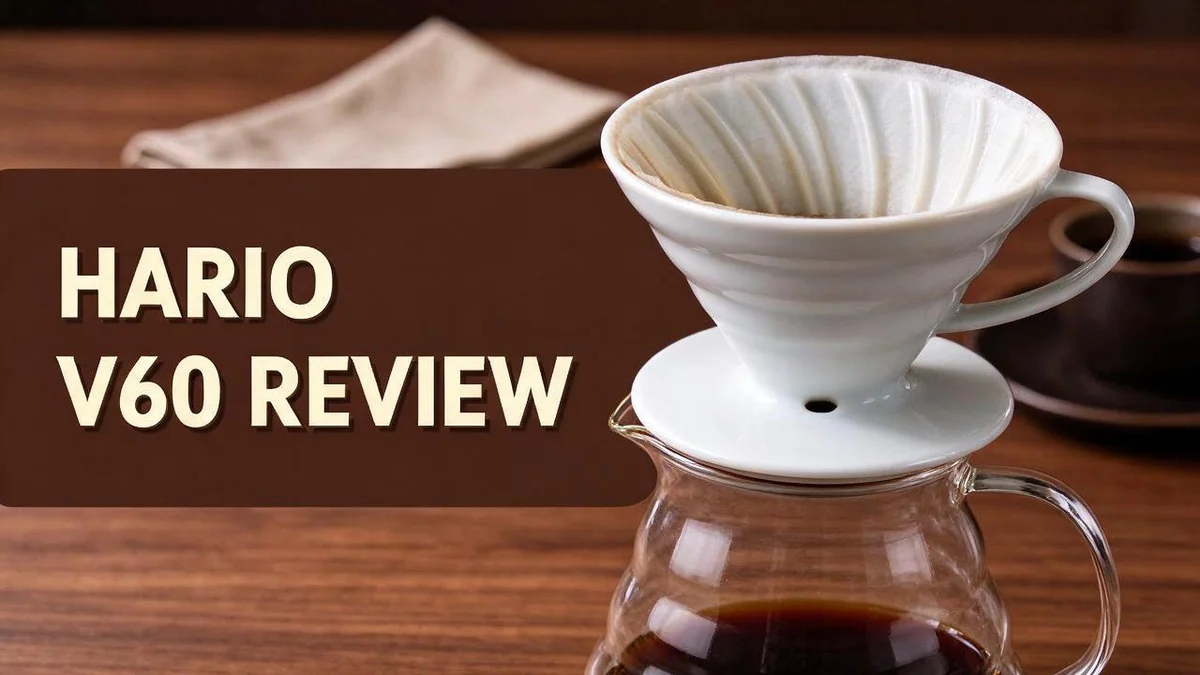
Hario V60 Review: Is This Pour-Over Dripper Worth Buying?
Looking for a cup that tastes clean and bright? The Hario V60 might become your new favorite brewer. Many coffee lovers reach for it every morning.
Made in Japan, this simple cone gives you a clear and nuanced cup. It comes in plastic, ceramic, metal, or glass. You can pick the size that fits your kitchen.
The V60 uses a cone shaped paper filter and one large outlet hole. That design gives you total control over extraction. Every pour matters, so your brew changes with your technique.
Be ready for a learning curve. Too slow a flow can make your coffee bitter. Fine grinds help you get the best results.
In this review, you will learn how the V60 works. You will also see how it stacks up against rivals like the Kalita Wave, Chemex, and Aeropress. Let’s find out if this cone deserves a spot on your counter.
In a Nutshell
- Built for hands on control: The V60 lets you change pour speed, water flow, and timing. You decide how each brew turns out. This suits people who enjoy experimenting.
- Sold in four materials: You can choose plastic, ceramic, metal, or glass. Each material changes the feel of your setup and how it holds heat.
- Three sizes for every routine: Size 01 suits one or two cups. Sizes 02 and 03 work better for larger servings or a small group.
- Quick cleanup after brewing: Rinse the cone and toss the used paper filter. Cleanup takes only a minute.
- Light enough for trips: The cone packs flat and fits into a small bag. Many coffee fans pair it with an Aeropress on travel days.
- Different from the Kalita Wave: The Kalita Wave uses three small holes to slow the flow. The V60 uses one wide hole, so it rewards careful technique. Glass and ceramic versions can break, so handle them with care.
Build Quality and Materials

- Hario Starter Kit: Everything you need for a professional pour over cup of coffee at home or work—Just...
- Pour Control: The V60 features a single large hole, improving pour flow and provides users the ultimate...
Last update on 2026-11-27 / Affiliate links / Images from Amazon Product Advertising API
Material changes how the V60 feels during every brew. The cone shape stays the same, but the body can differ a lot. Think about weight, warmth, and sturdiness before you choose.
Plastic models feel light and easy to handle. They suit beginners who want a simple tool. Their low weight also helps on a busy morning or during a trip.
Glass lets you watch the bloom rise and the water drain. That view helps you adjust your pour with confidence. The downside is that glass needs careful handling, because a single drop can break it.
Ceramic holds heat well. The walls stay warm as water passes through, which can keep brewing temperature steady. This material feels heavier, so it sits firmly on top of your mug.
Metal versions offer a sturdy feel. A metal cone will not crack if it slips from your hand. Metal can get hot during brewing, so a towel helps when you lift it.
Each material needs gentle care. Use warm water and a soft sponge. Avoid harsh scrubbing that can scratch glass or dull a finish. Dry the cone fully before storing it so water spots do not form.
Choose your material based on your habits. Pick glass if you enjoy watching the process. Pick ceramic if you like steady heat. Pick metal if you want a tough option for daily use.
Check the fit before you buy. Some cones sit well on common mugs and carafes, while others need a specific size. Measure your vessel first to avoid a wobbly setup.
Also consider how often you brew. Daily use puts more stress on a cone, so a sturdier material may suit you better. Occasional brewing gives you more freedom in your choice.
Brew Performance and Flavor
The V60 shapes flavor more than many people expect. Water moves quickly through the grounds, so each small choice shows up in the cup.
Bloom sets the stage. Pour a small amount of hot water over the grounds and wait about thirty seconds. The coffee releases gas and swells. This step helps fresh beans release their aromas before the main pour begins.
Water temperature matters. Many brewers start near 200 degrees Fahrenheit. Hotter water pulls more flavor from the grounds. Cooler water keeps the taste softer and smoother.
Your pour style changes the body of the cup. Gentle circles in the center keep extraction even. Pouring around the edges can leave some grounds underextracted and others overextracted.
Timing tells the story. A brew that finishes in about three minutes often tastes balanced. A drain time that runs much longer can make the cup harsh, while a very quick finish may taste thin.
Coffee dose adjusts strength. A common starting point uses about 15 grams of coffee for every 250 milliliters of water. Adding more coffee makes the cup heavier. Using less makes it lighter and brighter.
Roast level also shapes taste. Light roasts often show fruity and floral notes. Dark roasts tend to taste chocolatey and rich. Try different beans to see which flavors you enjoy most.
Keep a simple brew log. Write down your grind size, water temperature, and pour time after each cup. Small changes over a few brews reveal what works best for your taste.
Learning Curve and Brewing Control
Mastering the V60 takes time. Most people need several brews before the cup tastes the way they want. Patience pays off here.
The single large hole gives you less help than other cones. Water drains fast unless you slow your pour. Many newcomers expect the cone to do the work alone, but it does not.
Think of each brew as a small test. Change one thing at a time. Adjust the grind, then the pour, then the timing. This way you learn what each change does.
Watch the drawdown time. A steady drain of about three to four minutes often signals a balanced brew. Much faster and the cup may taste thin. Much slower and bitterness can creep in.
Pour in slow, even circles. Keep the water level low in the cone so the grounds stay evenly wet. Uneven pours can leave dry pockets that taste sour. Try to keep your pour steady from start to finish. Starting and stopping often creates uneven flavor.
Grind consistency matters more than people expect. A mix of boulders and dust leads to uneven extraction. Invest time in a steady grinder setting before you blame the cone.
Sometimes the cup tastes off even when you follow every step. This is normal. Let a few days pass and try again with fresh beans. Keep notes on what changed, even if the results seem small. Small changes often bring big improvements.
Taste each cup with care. Sour notes often point to a fast drain. Give yourself a few weeks of practice. Short daily brews build muscle memory faster than occasional big sessions.
Control is the reward. Once you understand the flow, you can shape sweetness, body, and clarity on purpose. Each cup becomes a chance to practice.
Top 3 Alternatives
Kalita Wave Dripper

- PULLS THE PERFECT CUP: The pantented wave design reduces contact between the brewing space and the filter...
- TOP CHOICE OF COFFEE PROFESSIONALS: You'll find the Kalita Wave pour over coffee dripper in the world's...
Last update on 2026-11-27 / Affiliate links / Images from Amazon Product Advertising API
The Kalita Wave Dripper is a flat-bottom cone with three small holes. This shape helps the water flow slowly and evenly.
It works well for people who want a bright and sweet flavor. Brewing usually takes three to four minutes. You need a steady pour and a little practice.
Chemex Coffee Maker

- CHEMEX - simple, easy to use with timeless, elegant design
- All CHEMEX Coffeemakers are made of the highest quality, non-porous Borosilicate glass which will not...
Last update on 2026-11-27 / Affiliate links / Images from Amazon Product Advertising API
The Chemex Coffee Maker looks like a glass hourglass with a wooden collar. Its thick paper filter traps oils and fine grounds.
The result is a very smooth and crisp cup. Its size also makes it a great choice for guests. Many people display it on their kitchen counter.
Melitta Pour Over

- Quick and Easy Handcrafted Brewing: This 1-cup pour-over coffee maker with mug is the perfect way to make...
- Smart, Convenient Design: This pour-over's design allows optimal coffee flavor brewing and extraction
Last update on 2026-11-27 / Affiliate links / Images from Amazon Product Advertising API
The Melitta Pour Over uses a simple cone and paper filters. It is easy to find and easy to use.
Beginners often choose it for daily brewing at home. Cleanup takes only seconds. It also takes little time to learn.
Ease of Cleaning and Care
Cleaning a Hario V60 takes only a few minutes. Its simple cone has no valves, lids, or tiny gaskets. Fewer parts mean less time at the sink.
Start by discarding the used paper filter. Rinsing right away stops grounds from drying on the walls. Waiting until the next day makes cleanup much harder.
Coffee oils build up over time. They turn sticky and can add stale flavors to your next cup. A quick rinse after every brew keeps your V60 tasting fresh.
Look closely at the large outlet hole. Fine grounds can gather there and slow the drain. Clear it with a thin brush or a wooden toothpick. Check it after every few brews.
Once a week, give the cone a deeper clean. Soak it in a bowl of warm water with a pinch of baking soda. This loosens stubborn oil film that rinsing alone may miss.
Drying matters just as much. Set the cone upside down on a dish rack so air reaches every inside rib. Trapped water can leave mineral spots, especially in hard water areas.
Store the V60 where it will not knock against hard surfaces. Keep it on a stable shelf, not near the sink edge. This simple habit protects breakable versions from chips and cracks.
Paper filters need care too. Keep them in a sealed bag away from strong smells. Paper soaks up odors from the kitchen, and that can change how your coffee tastes.
Good cleaning habits take little effort. They protect your brewer and keep every cup clear and bright. Make cleanup part of your routine, and your V60 will serve you well for years.
Portability and Travel Use
The V60 travels well for coffee lovers who like brewing on the road. Its cone is small and light. It fits into a backpack or cabin bag with ease.
The plastic version is the best pick for trips. It is lighter and less likely to crack. The glass and ceramic models look lovely at home, but they need extra padding in a suitcase.
Size matters when you pack light. The 01 size works well for one cup on the go. The 02 size suits two travelers who share a morning brew.
You still need a few extras on the road. Pack paper filters, a small scale, and a sturdy travel grinder. Hotel rooms rarely offer a proper kettle, so plan your hot water ahead of time.
Grind control matters even more while traveling. Fine, even grounds keep the flow steady. Bring a grinder you trust instead of relying on bagged coffee.
The Aeropress is often the top travel choice. It is forgiving and sturdy, so it suits busy trip days. The Kalita Wave uses three smaller holes to restrict flow, which gives a different style of control.
The Melitta cone and Chemex are also popular peers. Both work well at home, yet their parts need careful handling on trips.
The V60 asks more from you than the Aeropress does. Travel days can feel rushed or tiring. Practice at home first so your road brews feel easy.
The Hario W60 also appears as a related option. Pick the setup that fits your trip length and daily habits.
Overall, the V60 suits weekend trips, camping, and office stays. It rewards travelers who enjoy a hands on ritual.
Pros and Cons
Pros
- Made in Japan with a simple, well-tested cone design
- Comes in plastic, ceramic, metal, or glass to suit different tastes
- Offers three sizes so you can match the cone to your cup count
- Works with easy-to-find V-shaped paper filters
- Rewards careful technique with a clean, focused flavor
Cons
- Slow flow can make the cup taste bitter
- Glass and ceramic versions can crack if dropped
- Needs a fine and consistent grind to perform well
- Less forgiving for beginners who make small mistakes
Who Should Buy It
The Hario V60 fits a certain kind of coffee drinker. It suits someone who enjoys the process as much as the cup.
Hobbyists who like to experiment will enjoy this cone most. They can change grind size, water temperature, and pour speed, then taste the result. Each brew teaches something new.
Curious home brewers who already own a kettle and a grinder often find it a natural next step. A gooseneck kettle helps with steady pours. A simple kitchen scale helps with exact measurements.
Coffee lovers who want to learn brewing basics also benefit. The V60 shows cause and effect clearly. Change one variable, and the cup changes too. That lesson sticks.
People who value a quiet morning ritual may enjoy it too. Pouring slowly over a filter can feel calm. Many people treat it as a daily pause rather than a chore.
Solo drinkers and couples who brew one or two cups each morning often like the flexibility. Each cup gets fresh attention, and nothing sits on a warmer.
Who should look elsewhere? Anyone who wants a push button answer may feel frustrated. Busy mornings with no time for trial and error can also make this brewer feel like a burden. A drip machine or an Aeropress may serve those needs better.
Beginners who want fast success should think twice. The brewer rewards patience, so early cups may taste uneven. Give yourself a few weeks of practice before you judge it.
Households with many coffee drinkers may also find it slow. Each cup needs its own filter and its own pour. Making four cups in a row takes real time.
Finally, shoppers who want a complete setup should plan ahead. The cone alone does not brew coffee. You will need fresh beans, a good burr grinder, and a steady hand. Think about these extras before you commit.
Final Verdict
The Hario V60 is a strong choice for people who love the process. It turns a simple cup into a small daily project. You adjust the grind, the water, and the pour. Each change shows up in the taste.
Think of this cone as a teacher. Many brewers hide mistakes, but the V60 shows them fast. A sour or flat cup tells you what to fix next. Over time, your skills grow and your coffee improves.
Our final take is simple. If you want quick results with little effort, look elsewhere. If you want to learn and taste every detail, this cone fits well.
Keep your expectations realistic. Your first few brews may taste weak or bitter, and that is normal. Write down your grind size, water temperature, and brew time. Log your results on paper or in a phone app. Small notes help you repeat great results.
Pair the cone with fresh beans for the best flavor. Freshly roasted beans taste bright and lively. Buy smaller bags more often so the coffee stays fresh. Your cup will show the difference right away.
The V60 also sparks good conversations. Friends often ask about your method. You can share a cup and explain each step. Coffee then feels social, not just routine.
Think about your kitchen before you commit. A sturdy material suits a busy counter. A lighter option works better for a small space. Choose the version you will reach for every morning.
Trust your taste more than any chart. Your palate decides what counts as good. In short, the V60 rewards patience and curiosity. It may frustrate people who want instant answers. For everyone else, it offers a clear and rewarding cup. Give it a few weeks, and your mornings may feel brand new.
Frequently Asked Questions
Why does my V60 coffee taste sour?
A sour cup usually means the water moved through the grounds too fast. Try a finer grind and pour in slower, even circles. Small changes can make a big difference.
What water temperature works best?
Aim for water that sits just off a boil, around 200 to 205 degrees Fahrenheit. Let the kettle rest for about a minute after it boils. Very hot water can pull harsh notes from light roasts.
Should I rinse the paper filter first?
Yes, always rinse it. A quick splash of hot water removes any papery taste. It also warms the cone, so your coffee stays hot until the last sip.
How do I clean the cone after brewing?
Rinse it right away with warm water. Used grounds dry hard and stick to the ribs. A soft brush clears the spiral grooves inside, and the cone stays fresh for months.
Can I use the V60 to learn brewing step by step?
Yes, this is one of its best uses. Change one thing at a time, like grind size or water amount. Then taste each cup and note what changed.

Hi, I’m Luna! I’m the voice behind CoffeePickster.com. I’m a coffee obsessive who’s spent way too many hours (and dollars) testing coffee makers so you don’t have to. I created this blog to help fellow coffee lovers find the right gear without the guesswork. Let’s brew something great together!