
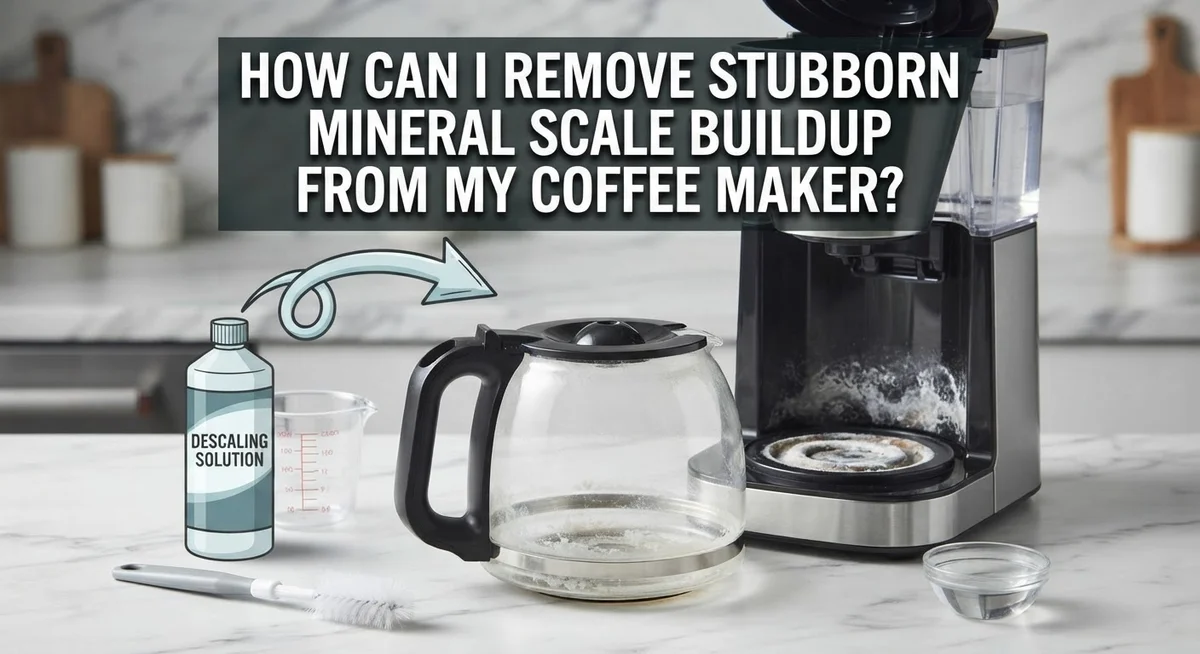
How Can I Remove Stubborn Mineral Scale Buildup From My Coffee Maker?
Does your morning coffee taste a little off lately? Maybe your machine takes longer to brew than it used to. If so, mineral scale buildup could be the hidden culprit.
Every time you brew coffee, minerals from water settle inside your machine. Over time, these minerals harden into a stubborn layer of scale. This buildup clogs internal parts and blocks water flow.
The result? Slower brewing, weaker flavor, and a machine that struggles to perform. Left untreated, scale can even shorten your coffee maker’s lifespan.
The good news is that you can fix this problem easily. You do not need fancy tools or expensive products. A simple solution of vinegar and water can dissolve years of buildup.
This guide walks you through the entire descaling process. You will learn exactly how much vinegar to use and how long to run each cycle. We also cover common mistakes people make when cleaning their machines.
In a Nutshell
- Mix white vinegar with water in a 1:1 or 1:2 ratio. This simple solution breaks down mineral deposits with ease.
- Empty your carafe first. Remove the used grounds and filter before you start the cleaning process.
- Pour your vinegar solution into the water chamber. Then run a full brewing cycle just like normal.
- Flush the machine 2 to 3 times with plain water only. This step removes all vinegar residue completely.
- Skipping the rinse cycles is a common mistake. Your coffee will taste like vinegar if you rinse only once.
- Watch for signs like slow brewing or bad taste. These signals tell you it’s time to descale again.
- Always check your manufacturer’s guidelines first. Some machines need specific care instructions for best results.
What Causes Mineral Scale Buildup in Coffee Makers
Mineral scale buildup happens because of the water you use every day. Tap water contains minerals like calcium and magnesium. When you heat water in your coffee maker, these minerals don’t disappear. Instead, they stick to the inside surfaces of your machine.
Over time, layer after layer of minerals accumulates. This buildup collects on heating elements, tubes, and other internal parts. The scale forms a crusty deposit that gets thicker with each brewing cycle.
Hard water causes faster buildup than soft water does. If you live in an area with hard water, you’ll notice scale problems sooner. Even soft water contains some minerals, though, so every coffee maker eventually needs cleaning.
The buildup creates several problems for your machine. It slows down the brewing process because water can’t flow smoothly through the clogged passages. Heat transfer becomes less efficient, so your coffee doesn’t brew at the right temperature. The result is weaker flavor and a machine that struggles to work properly.
You might notice your coffee tastes off or bitter. The machine may take much longer to complete a cycle. Some brewers stop working altogether if scale completely blocks the water flow.
The good news is that mineral scale is preventable and removable. Regular descaling keeps your machine performing well. You don’t need expensive products or complicated procedures. A simple vinegar and water solution dissolves mineral deposits effectively.
Checking your water quality helps you plan ahead. Harder water means you’ll need to descale more often. Most machines benefit from descaling every one to three months, depending on your water type and how often you brew.
Signs Your Coffee Maker Needs Descaling
Your coffee maker sends clear signals when mineral scale buildup becomes a problem. Learning to spot these signs helps you descale before performance drops significantly.
Slow brewing speed is often the first warning sign. If your machine takes noticeably longer to brew than usual, mineral deposits are likely blocking water flow through internal tubes. The water struggles to pass through the accumulated scale, which slows down the entire brewing process.
Off flavors in your coffee indicate scale buildup inside the machine. You might notice a bitter, metallic, or stale taste even though you’re using fresh beans and grounds. Mineral deposits affect how water interacts with your coffee, changing the final flavor profile.
Weak or watery coffee suggests that water isn’t staying in contact with grounds long enough. Scale buildup reduces water flow, which means less extraction happens during brewing. Your coffee ends up tasting thin or underwhelming.
Strange noises or sputtering during the brewing cycle point to scale blocking water passages. You might hear gurgling, hissing, or irregular sounds as water forces its way through mineral deposits.
Visible white or brown residue inside the water chamber or on the carafe indicates active scale formation. This crusty buildup accumulates visibly over time, especially in areas where water sits.
Reduced water output means less coffee reaches your cup than before. The machine may dispense only half the normal amount because scale restricts water movement.
Pay attention to these signs. They tell you exactly when your machine needs descaling. Addressing scale early prevents permanent damage and keeps your coffee tasting fresh. Most machines benefit from descaling every one to three months, depending on your water hardness and usage frequency.
What You Need Before You Start Descaling
Before you begin descaling your coffee maker, gather a few basic items. You need these supplies to clean effectively and safely.
White vinegar is your main cleaning agent. This acidic solution breaks down mineral deposits without damaging your machine. Regular household white vinegar works perfectly for this task.
You’ll need water to mix with the vinegar. Tap water is fine for this purpose. The ratio matters, so keep measuring tools handy.
A measuring cup helps you get the vinegar to water ratio correct. Most coffee makers work best with a 1:1 ratio or a 1:2 ratio of vinegar to water. Accuracy prevents problems during cleaning.
Have your coffee maker’s manual nearby before starting. Different machines have different descaling cycles and water chamber capacities. Your manual tells you exactly how much solution to use.
Empty containers are essential for catching water that flows out during the process. Place one under the carafe area and another under the water outlet if your machine has one. This prevents mess on your countertop.
A clean cloth or sponge helps you wipe away any residue after descaling finishes. You may notice white deposits around the water chamber or carafe.
Plan for extra time to complete the full process. Descaling takes 20 to 30 minutes total, including multiple water rinse cycles. Don’t rush this step because incomplete rinsing leaves vinegar taste in your coffee.
Ensure your machine is unplugged and cool before you start. This keeps you safe while handling the vinegar solution. Let your coffee maker sit for a few minutes if you just brewed coffee.
Step-by-Step Guide to Removing Stubborn Scale
Start by emptying your coffee maker completely. Remove the carafe, grounds basket, and any filters sitting inside. This gives you clear access to the water chamber where scale buildup hides.
Next, prepare your descaling solution. Mix white vinegar and water in your measuring cup using either a 1:1 ratio or a 1:2 ratio, depending on how heavy the buildup appears. A 1:1 mix works for stubborn scale, while 1:2 works for lighter deposits. Pour this solution directly into the water chamber until it reaches the fill line.
Place an empty container under the brew basket to catch liquid. This step prevents mess and lets you see how much solution flows through. Start your coffee maker’s cleaning cycle if it has one, or simply turn it on as if you’re brewing normally. Let the solution run through slowly.
Once the cycle finishes, turn off your machine and let it sit for 15 to 20 minutes. This waiting period gives the vinegar time to break down stubborn mineral deposits inside the heating element and pipes.
After the rest period, empty the carafe and refill the water chamber with plain water only. Run a complete brewing cycle to rinse away vinegar residue. Repeat this water only cycle at least two more times. This multiple rinsing step is critical because leftover vinegar affects your coffee’s taste.
Between each rinse cycle, let your machine cool for a few minutes. This protects internal components from thermal stress. When you finish the final rinse, your coffee maker is ready to brew fresh coffee that tastes noticeably better and brews faster than before.
How to Properly Rinse and Flush After Descaling
After you finish the descaling cycle, your job isn’t complete. The rinsing process is just as important as the descaling itself. Vinegar residue left inside your machine will affect your coffee’s taste and can damage internal components over time.
Start by emptying the carafe and removing any remaining vinegar solution from the water chamber. Rinse the carafe thoroughly under running water. You want to eliminate every trace of vinegar from this container.
Fill the water chamber with fresh, plain water only. Run a complete brewing cycle into an empty carafe. This first rinse cycle removes loose scale particles and initial vinegar residue. Empty the carafe when finished.
Repeat this water-only cycle at least two more times. Most coffee makers need three total rinse cycles to remove all vinegar completely. Some machines with larger water chambers may require four cycles.
Between each rinse cycle, let your machine cool for a few minutes. This prevents thermal stress on internal components and gives you time to empty the carafe.
Pay attention to any vinegar smell coming from the machine. If you detect vinegar after three cycles, run one or two additional cycles. Your nose is a reliable indicator of whether descaling residue remains.
After the final rinse cycle, run one more cycle with fresh water and let it brew into a cup. Smell and taste this sample. If vinegar smell or taste is absent, your machine is ready for regular use.
Don’t skip the rinsing step. Incomplete flushing leaves vinegar that interferes with flavor and potentially harms your machine’s longevity. Proper rinsing ensures your coffee tastes fresh and your maker stays in good working condition.
Common Mistakes That Leave Scale Behind
Many people skip essential rinsing steps and end up with vinegar taste in their coffee. This happens because one water cycle isn’t enough to remove all the cleaning solution. Your machine needs at least two or three complete water only cycles to flush out every trace of vinegar.
Using the wrong vinegar to water ratio causes problems too. Some people make the solution too strong, thinking more vinegar means better cleaning. Others dilute it too much, so the scale doesn’t dissolve properly. The correct balance matters for both effectiveness and preventing that sour aftertaste.
Another common mistake is not letting the descaling solution sit long enough. Many users run one quick cycle and immediately start rinsing. The solution needs time to break down mineral deposits. Letting it sit for 15 to 20 minutes gives the vinegar time to work on stubborn buildup inside the heating chamber and pipes.
People also forget to check their machine’s manual for specific instructions. Different coffee makers have different designs and recommendations. What works for one model might not work the same way for another. Your manual tells you the exact ratio and process your machine needs.
Rushing through the entire process leads to incomplete descaling. Taking your time matters more than speed. Allow cooling periods between cycles. This prevents damage and ensures each step works properly.
Finally, some users ignore warning signs that descaling failed. If your coffee still tastes odd or brews slowly after descaling, you likely need to repeat the process. Pay attention to how your machine performs after you finish. Successful descaling should noticeably improve both taste and brewing speed.
Troubleshooting Persistent Buildup and Recurring Issues
When mineral scale keeps coming back after descaling, your machine may have deeper issues. Persistent buildup happens for specific reasons, and understanding them helps you fix the problem permanently.
Hard water is the main culprit. If your tap water has high mineral content, scale returns quickly even after cleaning. You’ll notice this pattern repeating every few weeks instead of every few months. The minerals in your water simply accumulate faster than normal.
Check your descaling frequency. You may need to clean more often than the standard recommendation. Some users with very hard water descale monthly instead of quarterly. Pay attention to when taste changes or brewing slows down, then adjust your schedule accordingly.
Scale can hide inside tubes and valves where vinegar solution doesn’t reach easily. If rinsing doesn’t fully restore performance, internal blockages may exist. Running multiple water cycles helps, but stubborn deposits sometimes need a second descaling attempt after 24 hours.
Vinegar residue can mask real problems too. If your coffee tastes off after cleaning, incomplete rinsing is often the cause. Run extra water cycles beyond the standard three to four rounds. Some machines need five or six cycles to remove all vinegar smell and taste.
Consider your water quality as a long term solution. Hard water causes recurring issues that descaling alone cannot prevent. Filtering your tap water before filling the chamber reduces mineral content significantly.
Document your descaling dates and brewing changes. This tracking helps you spot patterns and adjust your maintenance routine. If scale returns within two weeks consistently, your water hardness requires more frequent attention than average machines need.
How to Prevent Future Mineral Scale Accumulation
Preventing future mineral scale buildup is simpler than removing stubborn deposits. The key is understanding what causes scale and taking action before it becomes a problem.
Hard water contains minerals that accumulate inside your machine. These minerals stick to heating elements and pipes over time. The harder your water, the faster scale builds up. You cannot eliminate hard water completely, but you can reduce its impact.
Descaling regularly is your best defense. Most machines need descaling every one to three months, depending on your water hardness. If you live in an area with very hard water, descale monthly. Softer water areas may only need descaling every few months. Pay attention to brewing speed and taste as your warning signs.
Use filtered or distilled water when possible. These options have fewer minerals than tap water. Filtering reduces mineral content significantly. This simple change slows scale accumulation dramatically.
Keep your machine dry between uses. Empty the carafe and water chamber after each brewing session. Moisture sitting in the machine allows minerals to concentrate and stick. Leaving water inside creates ideal conditions for scale formation.
Store your machine in a cool, dry place. Heat and humidity speed up mineral deposits. A cabinet or shelf away from steam works well.
Check your machine’s manual for specific maintenance tips. Manufacturers often recommend descaling schedules based on water hardness levels. Some machines have built in indicators that alert you when descaling is needed.
Combining regular descaling with filtered water and proper storage keeps your coffee maker running smoothly. You’ll notice better tasting coffee and faster brewing times. Prevention requires minimal effort but saves you from dealing with heavy scale later.
Final Thoughts
Removing mineral scale from your coffee maker does not need to feel hard. A simple vinegar and water solution can restore your machine to full performance. Most stubborn buildup responds well to this basic method.
Your coffee maker works hard every day. It deserves regular care in return. Descaling keeps water flowing smoothly and heating elements working properly.
Fresh, great tasting coffee depends on a clean machine. Scale buildup blocks flavor and slows down brewing time. A few minutes of maintenance brings back that rich taste you love.
Think of descaling as routine care, not an emergency fix. Set a schedule that matches your water type and usage. Machines used daily need more frequent attention than occasional brewers.
Consistency matters more than perfection here. You do not need fancy tools or expensive products. White vinegar and water solve most scale problems effectively.
Pay attention to how your coffee tastes and how fast it brews. These signals tell you when it is time to clean again. Your machine will often show warning signs before problems get serious.
Every coffee maker is different, so check guidelines specific to your model. Manufacturer instructions help you avoid mistakes and protect your investment.
Taking care of small maintenance tasks now saves bigger headaches later. A well maintained coffee maker lasts longer and performs better each day.
Clean equipment means better coffee, plain and simple. Make descaling part of your normal routine. Your taste buds and your machine will both thank you for the effort.
Frequently Asked Questions
How often should I descale my coffee maker?
Descale when you notice your coffee tastes off or brewing slows down. For most households, this happens every 1 to 3 months. Hard water areas need more frequent descaling. Check your machine’s manual for specific guidance based on your model.
Pay attention to brewing speed and flavor. These signs tell you when descaling is needed rather than following a strict calendar.
What is the best vinegar to water ratio?
Most coffee makers work well with a 1:1 ratio of white vinegar to water. Some machines do better with 1:2 (one part vinegar, two parts water). Check your manual first since ratios vary by model.
Start with 1:1 if unsure. You can always adjust based on how well your machine descales.
Why does my coffee still taste like vinegar after descaling?
You likely need more water rinse cycles. Run 2 to 3 complete cycles with plain water only after the vinegar solution. Vinegar residue hides inside tubes and valves easily.
Skip the coffee grounds during rinse cycles. Just run water through the machine repeatedly until the vinegar smell disappears completely.
Can I use other liquids besides vinegar for descaling?
White vinegar is the standard choice because it works effectively and is safe for most machines. Some makers sell descaling solutions, but vinegar does the same job.
Always check your manual before using anything other than vinegar or approved descaling products.
Does descaling really improve my coffee?
Yes. Scale buildup blocks water flow and affects temperature. Your coffee brews slower and tastes stale. After descaling, you’ll notice faster brewing and fresher flavor immediately.

Hi, I’m Luna! I’m the voice behind CoffeePickster.com. I’m a coffee obsessive who’s spent way too many hours (and dollars) testing coffee makers so you don’t have to. I created this blog to help fellow coffee lovers find the right gear without the guesswork. Let’s brew something great together!