
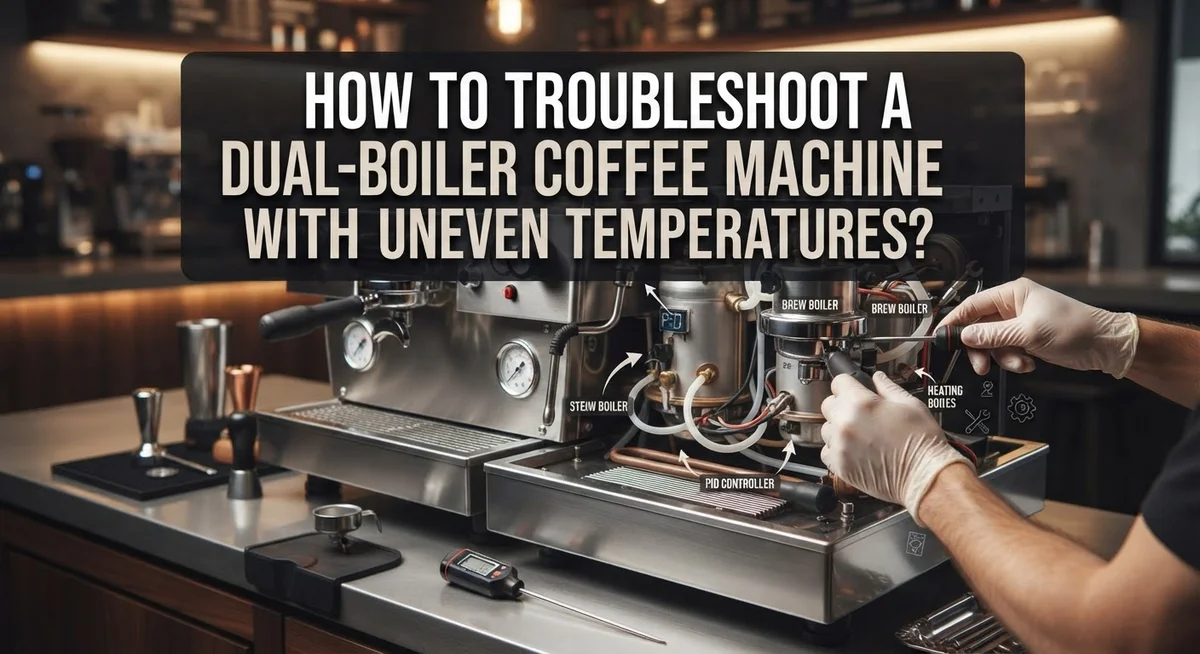
How To Troubleshoot A Dual-Boiler Coffee Machine With Uneven Temperatures?
Your dual boiler coffee machine promises the best of both worlds. One boiler handles espresso. The other manages steam. But what happens when the temperatures start acting strange?
Uneven heating can ruin your morning routine fast. Your espresso might taste flat one day and burnt the next. Your steam wand may take forever to heat up.
The good news? Most fixes are simple and do not require a technician.
In this guide, we will walk through the real reasons behind uneven temperatures. You will learn how to reset your machine properly. We will also cover cleaning steps that restore even water flow.
In a Nutshell
- Scale buildup is the top cause of uneven heating. It insulates the boiler and slows down temperature response.
- Clogged screens block water flow. This creates uneven extraction even when the boiler itself works fine.
- Warm up time matters. Give your machine at least 15 minutes before pulling a shot. Rushing this step causes temperature swings.
- Reset your machine if problems persist. Power off, hold the one cup button, then press power for three seconds.
- Check both valves. Make sure they are fully open so water flows properly to each boiler.
- Descale regularly. This single habit prevents most temperature issues before they start.
- Inspect the heating element and sensor. Damage here can cause slow or inconsistent heating that cleaning alone will not fix.
Understanding Dual-Boiler Temperature Systems
A dual boiler coffee machine has two separate heating systems working at the same time. One boiler heats water for espresso brewing. The other boiler heats water for steam. This design lets you brew and steam milk simultaneously without temperature conflicts.
Each boiler maintains its own temperature independently. The espresso boiler typically runs between 90 to 96 degrees Celsius. The steam boiler operates much hotter, around 120 to 130 degrees Celsius. Temperature sensors monitor each boiler separately to keep them stable.
Understanding how water flows through your machine matters. Water enters the boiler and heats up as it sits in the heating element. Once hot enough, it travels through the group head and into your portafilter basket. The screen inside the group head distributes this hot water evenly across your coffee grounds.
When temperatures become uneven, one boiler heats faster than the other. This creates extraction problems. Your espresso might taste sour on one side and bitter on the other. The steam wand may produce weak foam or inconsistent pressure.
The dual boiler system relies on precise temperature balance. If one heating element works harder than the other, temperatures drift apart. If water flow gets blocked, one boiler compensates by working overtime. This overwork creates hot spots and cold spots throughout the machine.
Scale deposits act as insulators on boiler walls and heating elements. They slow down heat transfer significantly. Clogged screens restrict water movement, forcing uneven pressure distribution. Both problems trigger temperature imbalances that affect your final cup quality.
Knowing these basics helps you spot problems faster when something goes wrong with your machine.
Common Causes of Uneven Heating
Scale buildup is the primary culprit behind uneven heating in dual boiler systems. When water heats repeatedly, minerals accumulate on boiler walls and heating elements. This mineral layer acts like a blanket, slowing heat transfer to the water. One boiler may heat faster than the other if scale deposits are uneven.
Clogged screens represent another major cause of temperature problems. Coffee grounds and mineral deposits block the shower screen over time. When water cannot flow evenly across the screen, some areas receive more heat than others. This creates hot spots and cold spots in your espresso extraction.
Heating element damage can also trigger uneven temperatures. If the element develops corrosion or internal breaks, it heats inconsistently. You might notice one boiler reaching temperature while the other lags behind. Damaged elements lose their ability to distribute heat uniformly.
Valve issues frequently go unnoticed but cause significant problems. When inlet or outlet valves do not open fully, water flow becomes restricted. Partial blockages mean one boiler receives less water than it should. This forces the heating element to work harder, creating temperature swings.
Insufficient warm up time is a simple yet common mistake. Dual boiler machines need at least 15 minutes to stabilize both boilers. Many users try brewing before the system reaches equilibrium. This results in inconsistent water temperatures during extraction.
Temperature sensor problems can also cause uneven heating. Faulty sensors send incorrect readings to the machine’s control system. The machine then overheats or underheats one boiler based on wrong information. Sensor failure prevents proper temperature regulation between the two boilers.
Understanding these causes helps you diagnose your specific problem. Start by checking the most likely culprits first. Scale and clogged screens account for the majority of uneven heating issues in dual boiler machines.
Step-by-Step Diagnostic Process
Start your diagnostic process by powering off your machine completely. Wait about 30 seconds, then power it back on. This simple reset clears temporary errors and recalibrates the system.
Next, let the machine warm up for at least 15 minutes before testing. Many temperature problems disappear once the machine reaches full operating temperature. Uneven heating often occurs when you brew too quickly.
Now check the group head screen. Remove it carefully and inspect for visible debris or mineral deposits. A clogged screen blocks water flow and causes uneven extraction. Rinse it thoroughly under hot water and reinstall it properly. Make sure it sits flush in the group head.
Run water through the group head for 10 seconds without the portafilter attached. Watch the water stream. It should flow evenly across the entire screen. If water sprays unevenly or drips from certain spots, the screen needs deeper cleaning.
Test each boiler’s temperature separately. Pull a small shot into a cup and feel the temperature with your hand. Do the same with steam. If one feels significantly cooler, that boiler has a heating problem.
Check both water inlet valves. They should turn fully open without resistance. A stuck valve restricts water flow to one boiler.
Listen for the heating element cycling on and off. Normal machines cycle every few minutes. If one boiler cycles constantly while the other stays quiet, the heating element or sensor needs attention.
Document what you find. Write down which boiler runs hot or cold, how long warm up takes, and whether the screen flows evenly. This information helps you pinpoint the exact problem. You can now move forward with targeted fixes based on your findings.
Resetting Your Machine Correctly
Resetting your machine correctly is your first step when temperature problems appear. A proper reset clears any error codes and restarts the heating system from scratch.
Start by powering off your machine completely. Wait at least 30 seconds before proceeding. This pause allows all electrical components to discharge fully and prevents incomplete resets.
Now locate your machine’s reset button combination. Most dual boiler machines use a specific key sequence. Press and hold the one cup button, then press the power button for exactly 3 seconds. Release both buttons simultaneously. You should see lights flash or hear a beep confirming the reset worked.
Allow your machine to complete its startup cycle. Do not interrupt this process. The machine needs 2 to 3 minutes to run through its initialization sequence. During this time, heating elements activate and sensors calibrate themselves.
After the startup cycle finishes, turn off your machine again. Wait another 30 seconds. Power it back on normally. This double reset ensures both boilers receive fresh calibration signals.
Let your machine warm up for at least 15 minutes before testing. The espresso boiler and steam boiler need separate time to reach their target temperatures. Check your user manual for the exact warm up time your model requires.
Once warm up completes, test water temperature at the group head. Run water through without the portafilter for 10 seconds. Feel the water temperature with your hand. It should feel consistently hot, not lukewarm or scalding in spots.
If temperatures still feel uneven after this reset, move forward with cleaning and descaling steps. A proper reset establishes your baseline. Any remaining problems point to physical issues like scale or clogged screens that need direct attention.
Cleaning Screens and Checking Water Flow
Cleaning your screens is one of the most effective ways to fix uneven temperatures. A clogged screen blocks water flow and creates hot spots in your espresso puck. Some areas get saturated while others stay dry, leading to inconsistent extraction and temperature readings.
Start by removing your portafilter from the group head. Unscrew the screen basket carefully and soak it in hot water for five minutes. This softens any coffee residue or mineral deposits stuck to the mesh.
Use a soft brush to gently scrub the screen. Work in circular motions to avoid damaging the mesh. Pay special attention to the edges where scale buildup accumulates. Rinse thoroughly under running water until the water runs completely clear.
Check the group head screen as well. Remove it and inspect for debris. Clean it using the same method. A clean screen ensures water distributes evenly across your coffee bed.
Reinstall both screens carefully. Make sure they sit flush and secure. A loose screen creates uneven water distribution, which causes temperature problems to persist.
Now test your water flow. Run water through the group head without the portafilter for ten seconds. Water should flow smoothly and evenly. If you see sputtering or slow flow, mineral deposits remain inside the boiler.
Proper water flow is essential for even heating. When water moves smoothly through your machine, both boilers reach consistent temperatures. Uneven flow forces heating elements to work harder in some areas, creating the temperature imbalance you’re experiencing.
Clean your screens every two weeks during regular use. This simple maintenance step prevents most temperature problems before they start.
Descaling to Restore Consistent Heat
Scale buildup is the main culprit behind uneven temperatures in dual boiler machines. When mineral deposits accumulate inside your boilers and heating elements, they act like a blanket. This insulation slows down heat transfer and creates hot spots in some areas while leaving others cool.
Descaling removes these deposits and restores your machine’s ability to heat water evenly. The process is straightforward and worth doing every 3 to 6 months depending on your water hardness.
Start by filling your water tank with a descaling solution mixed according to the instructions. Run the solution through your group head for about 10 seconds, then stop. Let the solution sit inside the machine for 20 minutes. This waiting period allows the descaling liquid to break down stubborn mineral deposits.
After the soak time ends, run more solution through the group head slowly. Continue this process until your tank empties completely. You should notice the water flowing more freely as scale dissolves.
Next, empty your tank and refill it with fresh water only. Run plain water through the group head for several minutes to rinse away all descaling solution. Repeat this rinsing step at least three times to ensure no residual chemicals remain.
Finally, let your machine sit for 15 minutes with fresh water inside. Then run water through both the group head and steam wand to flush everything out completely.
Once descaling finishes, allow your machine 20 minutes to warm up fully. Test the temperature at your group head. You should notice much more consistent heat now. Regular descaling keeps your dual boiler system running smoothly and prevents future temperature problems.
Mistakes That Worsen Temperature Problems
Skipping your warm up time is one of the biggest errors you can make. Many users turn on their machine and start brewing within just a few minutes. Your dual boiler machine needs at least 15 minutes to reach proper operating temperature. Rushing this step guarantees uneven heat across both boilers.
Neglecting your descaling schedule creates serious problems over time. Scale deposits build up inside your boilers and act like insulators. This buildup slows heating and creates temperature inconsistencies. You should descale every 1 to 3 months depending on your water hardness.
Ignoring visible scale on your heating element or boiler walls is another costly mistake. Scale doesn’t just slow heating. It also blocks water flow and creates hot spots. When you see white or brown crusty deposits, descale immediately rather than waiting.
Not reinstalling your clean screen properly causes uneven water distribution. After you clean your screen, make sure you seat it firmly back into place. A loose screen allows water to spray unevenly across your coffee bed. This results in some areas staying cooler than others.
Leaving your valves partially closed restricts water flow between boilers. Check that both your espresso and steam valves are fully open. Restricted flow prevents proper temperature balance between your two boilers.
Ignoring strange sounds or slow heating as temporary issues is risky. These signs tell you something needs attention now. Waiting makes the problem worse and can damage heating elements.
Regular maintenance prevents all these mistakes. Clean your screens every two weeks. Stick to your descaling schedule. Allow proper warm up time. These simple habits keep your temperatures even and your machine working well.
When to Inspect Heating Elements and Sensors
When your dual boiler machine shows uneven temperatures, inspecting heating elements and sensors becomes necessary. These components work together to maintain proper heat in both boilers. Understanding when to check them helps you catch problems early.
Start your inspection when you notice slow heating or temperature fluctuations that don’t improve after descaling. If your machine takes longer than 20 minutes to reach operating temperature, a heating element may have failed. Scale buildup on the heating element acts as an insulator, blocking heat transfer to the water.
Check your temperature sensor next. This device tells your machine when to stop heating. A faulty sensor causes the machine to overheat one boiler while leaving the other cold. Look for any visible damage, corrosion, or loose connections around the sensor area.
Perform a visual inspection of both heating elements if your machine allows access. Look for white or brown crusty deposits. These indicate scale accumulation that requires professional cleaning or replacement. Never attempt to remove heating elements yourself unless you have technical experience.
Listen for unusual sounds during operation. Loud crackling or popping suggests scale inside the heating element. These sounds mean water cannot flow evenly through the heated surfaces.
Test each boiler’s temperature separately using a reliable thermometer. Insert it into your group head or steam wand. Temperature readings that differ by more than 5 degrees Fahrenheit indicate a sensor or heating element problem.
If inspections reveal damage, contact a service technician. Attempting DIY repairs on heating elements and sensors risks electrical hazards and machine damage. Professional service ensures your machine returns to proper function safely and reliably.
Final Thoughts
Uneven temperatures in your dual boiler machine don’t have to ruin your coffee routine. Most problems trace back to simple causes. Scale buildup, clogged screens, and worn sensors top the list.
Regular care solves most issues before they start. Descale your machine on schedule. Clean your screens every two weeks. These small habits protect both boilers from damage.
Patience matters during troubleshooting. Give your machine enough warm up time. Rushing this step causes many temperature problems. Fifteen to twenty minutes makes a real difference.
Pay attention to warning signs early. Slow heating, strange noises, or inconsistent shots all signal trouble. Address these issues quickly instead of waiting.
A simple reset often fixes minor glitches. Power off your machine first. Hold the one cup button, then press power for three seconds. This clears small errors without extra work.
Check your valves during every troubleshooting session. Partially closed valves restrict water flow between boilers. This creates temperature gaps that ruin your espresso and steam quality.
Testing each boiler separately gives you clear answers. Use a reliable thermometer to measure both sides. This tells you exactly where the problem lives.
If basic fixes don’t work, inspect your heating elements and sensors. Visible damage or scale means it’s time for professional help. A qualified technician can replace faulty parts safely.
Consistency is key for long term success. Stick to your maintenance schedule without skipping steps. Your dual boiler machine rewards consistent care with steady, reliable heat.
Troubleshooting doesn’t need to feel complicated. Follow these steps in order, and you’ll likely solve your temperature issues fast. Your coffee deserves that extra attention.
Frequently Asked Questions
Why does my dual boiler machine heat unevenly?
Scale buildup is the main culprit. Over time, mineral deposits accumulate inside your boiler and heating element. This scale acts like an insulator, blocking heat from spreading evenly. A clogged shower screen also restricts water flow, creating hot and cold spots in your coffee bed.
How do I know if my machine needs descaling?
Watch for slow heating or temperature that won’t stabilize. If your machine takes longer than usual to warm up, descaling is overdue. You might also notice reduced water pressure or taste changes in your espresso. Regular descaling every 30 to 60 days keeps problems away.
What’s the fastest way to reset temperature issues?
Power off your machine completely. Hold the one-cup button and press power for three seconds. Release everything and let the machine restart. This resets minor temperature glitches without taking apart anything. Wait 15 minutes for full warm-up before brewing.
Can a dirty screen cause uneven extraction?
Yes, absolutely. Your shower screen controls how water spreads across the coffee grounds. When mineral deposits or old coffee oils clog it, water pools in certain areas. This creates uneven extraction and temperature problems. Clean your screen every two weeks and reinstall it properly. Make sure it sits flat and secure.
Should I test each boiler separately?
Testing separately gives you clear answers. Use a thermometer to check the espresso boiler temperature, then the steam boiler. Compare the readings to your machine’s manual specs. Big differences between the two indicate a heating element or sensor problem that needs professional attention.

Hi, I’m Luna! I’m the voice behind CoffeePickster.com. I’m a coffee obsessive who’s spent way too many hours (and dollars) testing coffee makers so you don’t have to. I created this blog to help fellow coffee lovers find the right gear without the guesswork. Let’s brew something great together!