
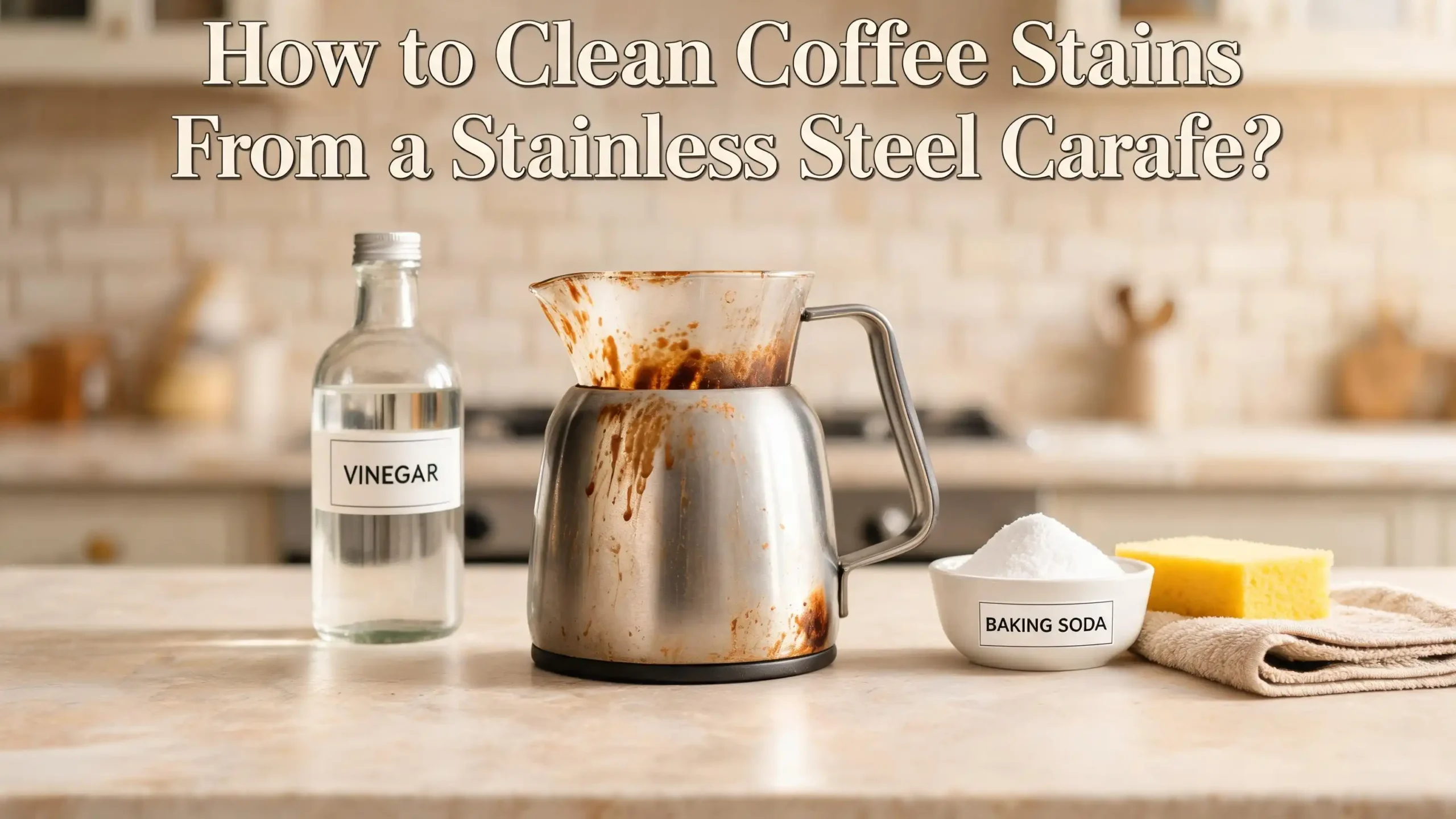
How to Clean Coffee Stains From a Stainless Steel Carafe?
Coffee stains inside a stainless steel carafe can make a good coffee routine feel annoying fast. The brown film looks bad, old coffee oils can affect flavor, and a narrow opening makes scrubbing harder than it should be.
The good news is that you can clean most stains with simple items you likely already have at home.
This guide shows clear steps that work for light stains, deep stains, odor, and hidden residue in the lid and spout.
Key Takeaways
- Coffee stains are more than a color problem. They often come from old coffee oils, tannins, and mineral deposits. These can hold odor and make fresh coffee taste bitter or flat. A clean looking carafe can still hold residue if you only rinse it with water.
- Start with the gentlest method first. Warm water and dish soap work well for fresh stains and daily care. This method is safe, simple, and easy to repeat. If the stain stays, move to baking soda or a longer soak.
- Different stains need different fixes. Oil film responds well to baking soda or a dishwasher detergent soak. Hard water film responds better to vinegar. A narrow neck stain often needs motion inside the carafe, so rice and soapy water can help where a brush cannot reach.
- The lid matters as much as the carafe. Coffee can hide in the lid, spout, and small seals. That old residue can cause smell and bad taste even after the body of the carafe looks clean. Clean the lid parts on the same day you deep clean the inside.
- Avoid harsh cleaners. Bleach, steel wool, and wire brushes can harm stainless steel or leave damage behind. Safe cleaning is better than fast cleaning if you want the carafe to last.
- Prevention saves time. Rinse after each use, leave the lid open to dry, and deep clean once each week if you brew often. Small habits stop dark buildup before it becomes a hard stain.
Why Coffee Stains Build Up Inside a Stainless Steel Carafe
Coffee stains do not appear from one cup alone. They build layer by layer. Hot coffee leaves behind oils, tannins, and tiny solids. Water also leaves minerals if your tap water is hard.
A stainless steel carafe hides buildup better than glass. You cannot always see the film clearly. That is why many people think the carafe is clean even when it still holds residue. The inside may look dark only near the bottom, but a thin coat can cover the whole wall.
Old coffee oils matter because they change flavor. They can oxidize over time. That stale layer can make fresh coffee taste bitter, sour, or dull. A coffee maker guide from Ratio points out that regular rinsing is often not enough to remove that oil film fully.
Mineral scale also adds to the problem. If water dries inside the carafe, it can leave a cloudy layer. Vinegar based cleaning guides from major coffee maker brands also connect mineral buildup with weaker performance and worse taste in coffee gear.
Pros: Understanding the cause helps you choose the right cleaning method.
Cons: If you guess the cause wrong, you may use a weak method and waste time.
The simple rule is this. Dark oily stains need oil cutting help. White or cloudy film needs scale removal help. If you treat both, your carafe usually comes back to a clean, fresh state.
What To Do Before You Start Cleaning
Before you clean, give yourself a simple setup. This small step saves time and helps you avoid damage. Empty the carafe fully. Rinse it with warm water. Remove the lid and any loose parts that can come off safely.
Check the inside with a flashlight from your phone. This helps you see whether the stain is light, heavy, or mixed with scale. A carafe often looks cleaner than it is, so the flashlight gives you a better view.
Next, gather a few safe tools. Use warm water, mild dish soap, baking soda, white vinegar, a soft bottle brush, and a soft cloth or sponge. If the opening is tight, keep a small amount of uncooked rice ready for the shake method.
Read your manual if you still have it. Some brands say the thermal carafe is not dishwasher safe and should be washed by hand with mild detergent. OXO says to hand wash the carafe and lid with mild detergent, and Ninja says to use warm soapy water and a soft foam brush or sponge for thermal carafes.
Also make one smart choice before you begin. Start with the least strong method first. Gentle cleaning protects the steel. If light soap does not work, then move to baking soda, vinegar, or a longer soak.
Pros: Good prep lowers the chance of scratches and missed residue.
Cons: Skipping prep often means doing the job twice.
A calm setup makes the whole cleaning job easier. It also helps you clean the hidden spots that most people forget.
Method One Use Warm Water and Dish Soap for Light Stains
If your carafe has fresh stains or only a light brown film, start here. Warm water and dish soap are often enough. This is the best daily care method because it is safe and easy.
Fill the carafe halfway with warm water. Add a few drops of dish soap. Put the lid on and swirl the mix for about thirty seconds. Then use a soft bottle brush or soft sponge to clean the inside. Focus on the bottom edge and the line where coffee often sits.
If the neck is narrow, let the soapy water sit for ten minutes first. That softens the film. After that, scrub again and rinse until the water runs clear. Leave the carafe open to dry.
This method works best on new buildup. It does not usually remove a thick, old brown layer by itself. Still, it is the best first move because it removes loose residue and lets you see what is left.
Pros: This method is gentle, cheap, and safe for frequent use. It does not leave a harsh smell, and it supports regular cleaning habits.
Cons: It can be too mild for deep stains, old oil film, or hard water scale.
Ninja recommends warm soapy water for cleaning a thermal carafe and says to use a soft foam brush or sponge, not a wire brush. OXO also advises hand washing with mild detergent after use.
For many homes, this method should be the default. If you do it after each use, you will need deep cleaning much less often.
Method Two Use Baking Soda for Dark Coffee Film
Baking soda is one of the best home fixes for coffee stains. It helps lift oil film and loosen brown residue without being too rough when you use it with water. This is often the best next step if soap did not do enough.
Add one to two tablespoons of baking soda to the empty carafe. Fill it with hot, not boiling, water. Swirl until the powder spreads well. Let it sit for twenty to thirty minutes. After the soak, use a soft bottle brush to scrub the inside.
If the stain is heavy, make a loose baking soda slurry instead. Add baking soda first, then a small amount of warm water. Swirl the thick mix around the bottom and stained walls. Let it rest, then scrub.
Rinse very well after cleaning. Smell the inside before you put the lid back on. If you still notice odor or powder, rinse again with warm water.
Baking soda is strong enough for many deep brown stains but still simple to use. It also helps with odor. That makes it a good two in one method for a carafe that looks dirty and smells stale.
Pros: Baking soda is easy to find, low cost, and useful for both stains and odor. It is also safer than many harsh cleaners.
Cons: It can leave powder behind if you do not rinse well. It may also need a second round for thick buildup.
This method works best for coffee oils and color stains. If your carafe also has cloudy mineral film, you may need vinegar after this step. Use baking soda first, then rinse, then do the scale step later if needed.
Method Three Use White Vinegar for Mineral Film and Mixed Buildup
White vinegar is a strong choice for mineral film and mixed residue. If your carafe has a cloudy look, a dull inside wall, or a stain that feels smooth and stuck, vinegar can help dissolve what soap leaves behind.
Pour equal parts white vinegar and warm water into the carafe, or use a lighter mix if the buildup is mild. Let it sit for fifteen to thirty minutes. Swirl it a few times during the soak. After that, empty the carafe and clean the inside with a soft brush or sponge.
Do not mix vinegar and baking soda inside the carafe at the same time if you want a strong cleaning effect. The fizz looks active, but the reaction reduces the cleaning power of each one. Use one, rinse well, then use the other later if needed.
Coffee maker brands often use vinegar for descaling. Hamilton Beach says plain white vinegar can help remove calcium deposits in coffee makers, and OXO explains that mineral scale builds up over time and affects performance if it is not removed.
Pros: Vinegar works well on hard water film and mixed residue. It is cheap and easy to find.
Cons: It has a strong smell. It also needs careful rinsing so the next pot of coffee does not taste sour.
After a vinegar soak, rinse the carafe several times with warm water. Then leave it open to air dry. If the smell stays, wash once more with mild soap and rinse again.
Method Four Use a Dishwasher Tablet Soak for Heavy Stains
For a very dark carafe with old coffee film, a dishwasher tablet soak can work well. This is a stronger home method, and many people use it when basic soap, baking soda, or vinegar do not fully clear the stain.
Place one dishwasher tablet in the empty carafe. Fill it with very hot water. Let it sit for at least thirty minutes. For heavy buildup, let it sit longer if your carafe maker allows safe soaking. Then empty it, scrub lightly with a soft brush, and rinse many times.
America’s Test Kitchen describes a method that uses a sliced open dishwasher tablet with hot water left in the pot overnight, then rinsed out in the morning. OXO also notes that if coffee oil stains remain in the carafe, a solution of dishwasher detergent and water can sit overnight before a full rinse and dry.
This method is useful for stains that look baked on. It can cut through old coffee oils more easily than dish soap. Still, it is stronger, so it should be a backup method, not your daily one.
Pros: It works well on heavy oil film and old brown stains. It needs very little scrubbing.
Cons: It can be too strong for frequent use. It also needs a very careful rinse to remove all residue and smell.
After cleaning, rinse the carafe until there is no slippery feel left inside. Then wash once with mild soap, rinse again, and air dry. If any cleaner taste remains, do one more full rinse cycle before brewing coffee.
Method Five Use Rice and Soapy Water for a Narrow Neck Carafe
A stainless steel carafe often has a shape that makes deep cleaning hard. If your brush cannot reach the bottom corners well, the rice method can help. Rice acts as a soft moving scrubber inside the carafe.
Add warm water to the carafe until it is about one third full. Add a few drops of dish soap. Then add one to two tablespoons of uncooked rice. Close the lid tightly if it seals well, or cover the opening firmly with your hand and a towel. Shake the carafe for thirty to sixty seconds.
The rice moves across the walls and bottom. It helps loosen film in spots where a sponge cannot reach. After that, empty the carafe, rinse out all rice grains, and wash once more with warm soapy water.
This method feels simple, but it works because the movement reaches hidden curves. It is especially helpful for older thermal carafes with a deep base and small opening.
Pros: It is very useful for narrow shapes. It uses common kitchen items and reaches corners well.
Cons: It is messy if the lid is not secure. It also will not remove strong scale or very dark stains by itself.
Use this method as a helper, not always as the only fix. If the stain is deep, do a baking soda soak or a detergent soak first. Then use the rice shake to remove what the soak loosened.
A bottle cleaning tip from home care sources often uses uncooked rice as a mild scrubber for narrow containers. The same idea works well for a coffee carafe if you use a gentle shake and rinse thoroughly after.
How To Clean the Lid, Spout, and Hidden Parts
Many people clean the inside of the carafe and stop there. That is a mistake. The lid, spout, and small seals can trap coffee, moisture, and odor. If these parts stay dirty, your fresh coffee can still taste old.
Start by removing any lid parts that come off safely. Check your manual if you are unsure. Wash each part with warm water and mild dish soap. Use a soft sponge or small soft brush to clean the spout opening, the underside of the lid, and any grooves.
If the lid has dried coffee inside tight spaces, soak it in warm soapy water for fifteen minutes first. Then scrub again. Rinse every part well. Let them dry fully before you put the lid back together.
Ninja says a thermal carafe should be cleaned with warm soapy water and a soft foam brush or sponge, and it warns against a wire brush. That same gentle rule should guide lid cleaning too.
The hidden parts often explain bad smell. If your carafe looks clean but your coffee still tastes stale, the lid is often the cause. Coffee can sit in tiny spaces for days if the lid stays closed after use.
Pros: Cleaning the lid removes hidden odor and taste issues that body cleaning alone cannot fix.
Cons: Small parts can be annoying to take apart and dry.
Make this part of every deep clean. It adds only a few minutes, but it often makes the biggest difference in smell and taste.
How To Remove Lingering Smell and Bitter Taste
Sometimes the stain is gone, but the smell stays. That old coffee smell can move into new coffee and make it taste flat or bitter. If that happens, focus on odor control after the stain cleaning step.
First, wash the carafe and lid with warm soapy water. Then do a baking soda soak. Add one tablespoon of baking soda and hot water. Let it sit for thirty minutes. Rinse well. If the smell still remains, clean the lid again and leave both lid and carafe open to air dry for a full day.
A stale taste often comes from old coffee oils. Ratio explains that these oils can cling to the carafe surface and affect the flavor of fresh coffee over time. That means odor and taste problems are linked. If you remove the oil film fully, the smell often improves too.
You can also do a final warm water rinse more than once after any strong cleaning method. This helps remove leftover cleaner smell. If you used vinegar or dishwasher detergent, this step matters even more.
Pros: Odor focused cleaning improves the taste of fresh coffee fast. It also helps you find hidden residue in the lid.
Cons: Some smells need repeated cleaning, especially if the carafe stayed closed while wet for many days.
The best habit is simple. Dry the carafe open. Dry the lid open. Air flow helps a lot. A clean but sealed wet carafe can still develop odor if it never gets a chance to dry fully.
What You Should Never Use on a Stainless Steel Carafe
Some cleaners seem powerful, but they can damage stainless steel. That damage may show as dull areas, discoloration, rust spots, or fine scratches. A safe clean is always better than a harsh clean.
Do not use bleach. A cleaning expert quoted by Southern Living explains that bleach can break down the thin protective chromium layer on stainless steel. Over time, that can lead to pitting, discoloration, and rust.
Do not use steel wool. Do not use a wire brush. Do not use very rough scouring pads. Ninja also says not to use a wire brush on the thermal carafe. Rough tools can scratch the inside, and those scratches can make future residue stick more easily.
Be careful with the dishwasher too. Some thermal carafes are not dishwasher safe. OXO says its carafe and lid should be hand washed, and Ninja says the thermal carafe is not dishwasher safe.
Pros: Avoiding harsh tools helps the carafe last longer and keeps the surface smoother.
Cons: Gentle methods may take more time than harsh ones.
The basic rule is easy. Use soft tools, mild soap, and targeted soaks. That gives you a clean carafe without turning a stain problem into a damage problem.
How To Keep Your Stainless Steel Carafe Clean Longer
The easiest stain to remove is the one that never gets hard. A few small habits can keep your carafe cleaner and cut deep cleaning time.
Rinse the carafe right after you pour the last cup. Use warm water, not cold. Warm water helps remove fresh oils before they stick. Then leave the lid off so the inside can dry.
Wash the lid often. This matters more than many people think. The lid collects coffee drops, steam, and trapped odor. If you brew every day, clean the lid every few days and deep clean it every week.
Deep clean the whole carafe once a week if you use it daily. Ratio says regular rinsing is not enough because oils can cling to surfaces and affect flavor over time.
If you also want better coffee maker care, descale the machine on schedule. OXO notes that scale builds up naturally and that water hardness affects how often descaling is needed. Hamilton Beach also says vinegar cleaning can help remove calcium deposits from coffee makers.
Pros: Prevention lowers odor, keeps flavor fresher, and makes cleaning easier.
Cons: It requires steady habits, and missed days can let buildup return.
The big win is simple. A quick rinse today can save a long deep clean later. That is the easiest way to keep a stainless steel carafe bright, fresh, and ready for the next pot.
FAQs
How often should I deep clean a stainless steel coffee carafe
If you brew coffee every day, deep clean the carafe once each week. If you brew only a few times a week, deep clean it every two weeks. Rinse it with warm water after each use and let it dry open. Daily care lowers the need for hard scrubbing later.
Why does my carafe still smell like coffee after I wash it
The smell often stays in the lid, spout, or old oil film on the inside wall. Wash the lid parts well, then do a baking soda soak and let everything air dry fully. A closed wet lid can hold odor even after a normal wash.
Can I use bleach to remove coffee stains
No. Bleach is a poor choice for stainless steel. It can damage the protective surface and may lead to discoloration or rust over time. A mild dish soap wash, baking soda soak, or vinegar soak is safer.
Is vinegar or baking soda better for coffee stains
Both help, but they do different jobs. Baking soda is better for oily brown film and odor. Vinegar is better for mineral film and scale. Use the method that matches the stain, or use them one after the other with a full rinse in between.
Can I put my stainless steel thermal carafe in the dishwasher
Many thermal carafes should be hand washed. Some brands say the thermal carafe is not dishwasher safe, even if other coffee maker parts are. Check your manual first. If you are unsure, hand washing is the safer choice.

Hi, I’m Luna! I’m the voice behind CoffeePickster.com. I’m a coffee obsessive who’s spent way too many hours (and dollars) testing coffee makers so you don’t have to. I created this blog to help fellow coffee lovers find the right gear without the guesswork. Let’s brew something great together!