Why Is My Battery Powered Milk Frother Losing Power Quickly and How to Fix It?
You pressed the button on your milk frother this morning. It spun slowly, made a weak whirring sound, and barely stirred your milk. Yesterday it was working fine. Now you are staring at a cup of flat, unfoamed milk wondering what went wrong.
This is one of the most common frustrations for coffee lovers who use battery powered frothers at home. The good news is that a dying frother does not always mean a broken frother.
In most cases, the fix is simple, fast, and free. Weak batteries, dirty whisks, corroded contacts, and overworked motors are the usual suspects. Each of these problems has a clear solution you can do right at your kitchen counter.
This post will walk you through every reason your battery powered frother loses power quickly. You will learn what causes each problem and exactly how to fix it step by step. By the end, your frother should spin like new, and your morning lattes should taste like they came from a cafe.
In a Nutshell
- Dead or weak batteries cause over 50% of all frother power problems. Even batteries that still have some charge left can fail to deliver the current a frother motor needs to spin at full speed. Always replace both batteries at the same time with fresh ones from a trusted brand.
- Dried milk buildup on the whisk creates drag that slows the motor down. The spring coil on a frother whisk traps milk residue after every use. Over time, this residue hardens and forces the motor to work harder, which drains batteries faster and reduces spin speed.
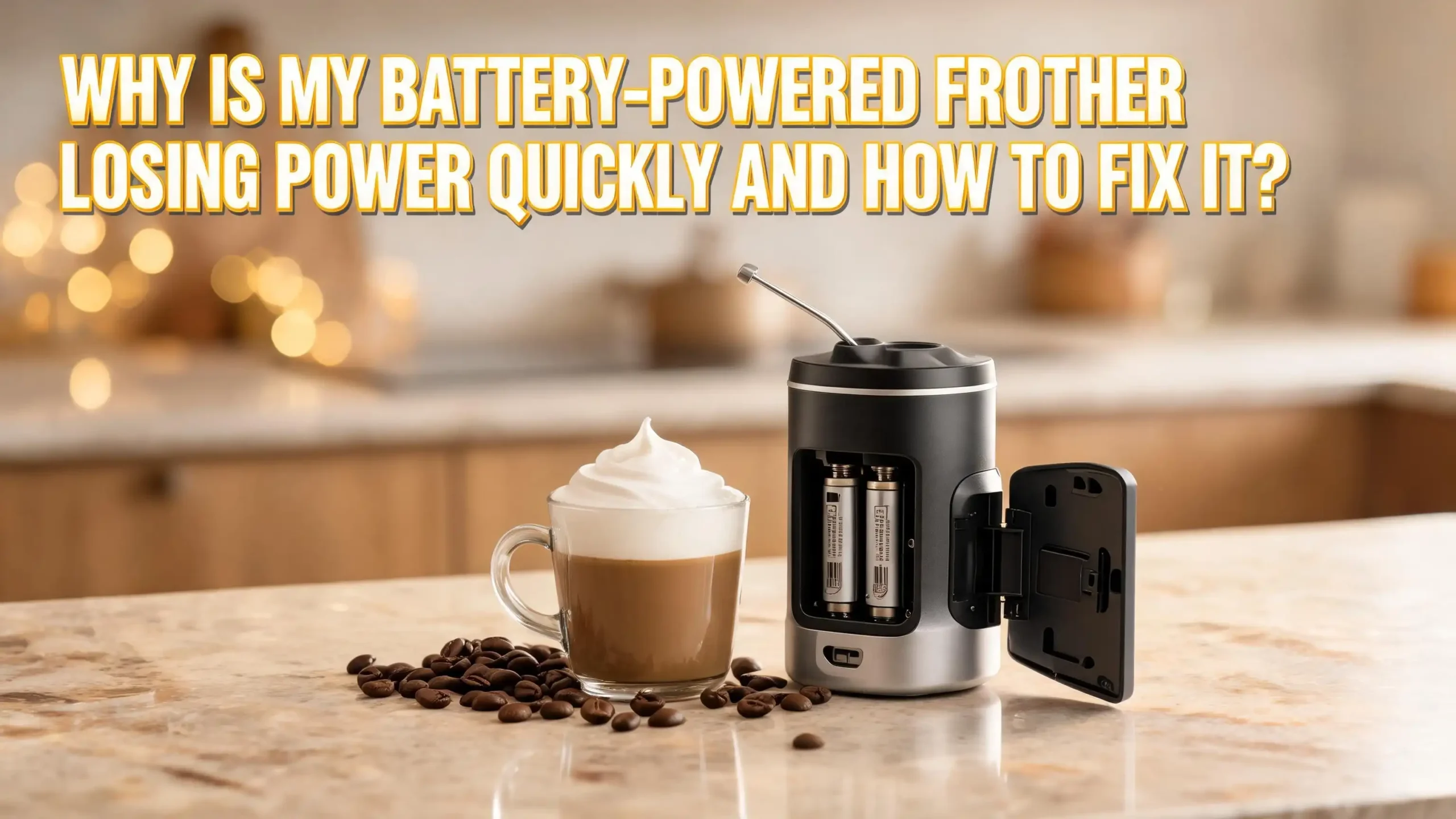
- Corroded battery contacts block the flow of electricity. If old batteries leak inside the compartment, they leave a white or green crusty residue on the metal contacts. This corrosion creates resistance and reduces the power that reaches the motor.
- Running the frother too long overheats the small motor. Most handheld frother motors are built for short bursts of 15 to 30 seconds. Using them for 60 seconds or longer causes the motor to overheat and slow down or shut off completely.
- Using the wrong battery type shortens power life significantly. AA and AAA batteries have the same voltage, but AA batteries deliver more current and last longer. Always use the battery type your frother was built to accept, and consider switching to high quality rechargeable batteries for consistent power output.
The Most Common Reason: Your Batteries Are Weak or Dead
The number one reason a battery powered frother loses power is simple. The batteries are running low. This sounds obvious, but many people overlook it because the frother still turns on. A frother can activate with weak batteries but spin too slowly to create foam.
Battery powered frothers need a specific amount of current to spin their motors at full speed. As batteries drain, they deliver less voltage and less current. The motor still receives enough power to turn, but not enough to reach its proper RPM. This results in slow, weak spinning that barely moves the milk.
Replace both batteries at the same time. Mixing one fresh battery with one old battery causes uneven power delivery. The weak battery acts like a bottleneck and limits the performance of the fresh one. Always use two new batteries from the same pack.
Fresh alkaline batteries from brands like Duracell or Energizer provide the most consistent current output. Dollar store batteries or generic brands often have lower capacity and drain faster. If you froth milk every day, expect to replace standard alkaline batteries every four to six weeks depending on how long each frothing session lasts.
How Battery Corrosion Kills Your Frother’s Power
Open your frother’s battery compartment right now and look at the metal contacts. If you see white, blue, or green crusty buildup, that is battery corrosion. It is one of the sneakiest power killers because it develops slowly and hides inside the compartment where you rarely look.
Corrosion happens when old batteries leak a small amount of chemical residue. This residue reacts with the metal contacts and creates a layer of insulation between the battery and the contact. Even a thin layer of corrosion can significantly reduce the flow of electricity to the motor.
Here is how to clean corroded battery contacts. Remove the old batteries and discard them safely. Dip a cotton swab in white vinegar or lemon juice. Gently scrub the corroded contacts with the damp swab. The acid in the vinegar dissolves the alkaline residue and the crusty buildup should start to fizz and break apart. After scrubbing, wipe the contacts dry with a clean cloth. Wait five minutes for everything to dry completely before inserting fresh batteries.
For stubborn corrosion, use fine grain sandpaper or a pencil eraser to gently polish the metal contacts. This removes any remaining residue and restores a clean surface for proper electrical contact. Prevent future corrosion by removing batteries from the frother if you plan to store it for more than a week.
Why the Wrong Battery Type Drains Faster
Not all batteries perform equally in a milk frother. Using the wrong battery type or a low quality brand can cause your frother to lose power much faster than expected. Understanding the differences helps you choose the right batteries for longer, stronger performance.
AA and AAA batteries both produce 1.5 volts, but AA batteries hold more energy and deliver more current. Some frother owners have tried using AAA batteries with a spacer adapter in an AA slot. This works temporarily, but AAA batteries cannot supply as much current as AA batteries. The motor receives less power and drains the smaller batteries very quickly.
Rechargeable NiMH batteries are an excellent option for daily frother users. Standard alkaline batteries deliver 1.5 volts when fresh but drop steadily as they drain. Rechargeable NiMH batteries deliver a slightly lower 1.2 volts, but they maintain that voltage more consistently throughout their charge cycle. This means your frother spins at a steady speed for longer before needing a recharge.
High quality rechargeable AA batteries with a capacity of 2000 mAh or higher provide the best balance of power and longevity for frothers. They pay for themselves after just a few charge cycles compared to buying disposable batteries every month. Make sure your charger is a smart charger that stops charging when the batteries are full to prevent overcharging and extend battery lifespan.
Dried Milk Residue Is Slowing Your Motor Down
Your frother motor might be perfectly fine. The batteries might be fresh. But if the whisk is caked with dried milk residue, the motor has to work much harder to spin. This extra resistance drains battery power faster and reduces the speed of the whisk.
Milk contains proteins, fats, and sugars. When milk dries on the spring coil of a frother whisk, it forms a hard, sticky layer. This layer thickens over time if the whisk is not cleaned after every use. The buildup adds friction to the spinning mechanism and acts like a brake on the motor.
Clean your frother whisk immediately after every use. Fill a cup with warm water, dip the whisk in, and turn the frother on for five to ten seconds. The spinning action removes most of the fresh milk residue. Then wipe the whisk with a paper towel. This 30 second routine prevents 90% of buildup problems.
For existing buildup, soak the whisk in hot water with a drop of dish soap for five minutes. Then scrub the spring coil gently with an old toothbrush. You will see white flakes come off. That is the dried milk breaking loose. Rinse under running water and let the whisk air dry completely before reattaching it to the frother body. Never submerge the frother body in water because the motor and battery compartment will get damaged.
Your Motor Is Overheating from Extended Use
Battery powered frother motors are small and lightweight. They are built for short bursts of operation, typically 15 to 30 seconds at a time. If you run your frother continuously for 60 seconds or longer, the motor overheats and starts to slow down or shut off.
Small DC motors generate heat during operation. Without a cooling system, that heat builds up quickly inside the frother body. When the motor gets too hot, its internal resistance increases. This means it draws more current from the batteries, which drains them faster. Some frothers have basic thermal protection that shuts the motor off when it overheats. Others simply slow down gradually.
Froth in short intervals to protect the motor. Run the frother for 15 to 20 seconds, pause for a few seconds, then run it again. This gives the motor a brief moment to cool and prevents the internal temperature from climbing too high. Two or three short bursts produce better foam than one long continuous run anyway.
If your frother smells like burning or feels very hot to the touch, stop using it immediately. Let it sit for at least five minutes before trying again. A burning smell means the motor coil is overheating beyond safe limits. Repeated overheating damages the motor windings permanently and will eventually kill the frother. Keeping sessions short extends the life of both the motor and the batteries.
A Loose or Damaged Whisk Wastes Motor Energy
The whisk attachment must sit firmly on the motor shaft. If the whisk is loose, wobbling, or not fully connected, the motor spins but the whisk does not rotate properly. This wastes energy and makes the frother seem weak when the motor itself is fine.
Most handheld frothers use a simple push fit or magnetic connection for the whisk. Over time, the connection point can wear down. Milk residue can also build up on the shaft, preventing the whisk from sitting flush. When the whisk slips on the shaft, the motor spins freely without transferring its full power to the frothing coil.
Remove the whisk and inspect the connection point. Clean any dried milk or debris from both the whisk stem and the motor shaft. Push the whisk back on firmly until you feel or hear it click into place. If the whisk has a bent stem, it will wobble during operation and create uneven drag on the motor.
A bent or warped whisk should be replaced. Most frother brands sell replacement whisks separately, and many models use similar universal whisk sizes. A new whisk costs very little and can restore your frother to full performance. Check your whisk every few weeks for signs of bending, rust, or worn connection points. Replace the whisk every six to twelve months if you froth milk daily.
Hard Water Mineral Deposits Create Hidden Drag
If you live in an area with hard water, mineral deposits can build up on your frother whisk and inside the connection mechanism. These deposits are different from dried milk. They come from calcium and lime in the water and create a rough, chalky coating on metal surfaces.
Mineral deposits increase friction on the whisk spring. They also build up on the motor shaft and inside the whisk socket. This extra friction forces the motor to work harder, which drains batteries faster. The buildup is gradual, so you may not notice it until your frother seems noticeably weaker.
Descale your frother whisk once a month with a vinegar soak. Mix equal parts white vinegar and warm water in a cup. Submerge the whisk for 15 minutes. The acid in the vinegar dissolves the calcium and lime deposits. After soaking, scrub the whisk gently with a toothbrush and rinse under clean water.
For stubborn mineral buildup, use a food safe descaling solution instead of vinegar. These solutions are formulated to dissolve hard water deposits more effectively. Always rinse the whisk thoroughly after descaling to remove any residue. Dry the whisk completely before reattaching it. If your tap water is very hard, consider using filtered water to rinse your whisk after cleaning to prevent immediate re-deposit of minerals.
Moisture in the Battery Compartment Causes Problems
Water and batteries do not mix. If moisture gets inside the battery compartment, it can cause corrosion, short circuits, and poor electrical contact. This leads to rapid battery drain, intermittent power, or complete failure.
Moisture enters the battery compartment in several ways. Steam from hot milk can rise into the frother body during use. Washing the frother under running water, even briefly, can push water past the seals. Storing the frother in a humid environment like a kitchen counter near a stovetop also introduces moisture over time.
Always store your frother in a dry location. After cleaning the whisk, wipe the entire frother body with a dry cloth. Pay special attention to the area where the whisk meets the body because water collects at this joint. Never stand the frother upright with the whisk pointing up after washing because water will run down into the motor housing.
If water does get inside the battery compartment, remove the batteries immediately. Dry the compartment with a paper towel and then leave the compartment open in a warm, dry area for several hours. A small amount of uncooked rice placed near the opening can help absorb moisture from the air. Do not insert batteries until the compartment is completely dry. Even a small amount of moisture can cause the contacts to corrode within days.
The Motor Is Wearing Out After Extended Use
Every motor has a finite lifespan. If your frother is two or more years old and has been used daily, the motor itself may be wearing out. This is a natural process and not a defect. Small DC motors lose efficiency over time as the brushes wear down and the magnets weaken.
Signs of a dying motor include a grinding or clicking noise during operation, noticeably slower spinning even with fresh batteries, and the motor starting and stopping randomly. These symptoms indicate internal wear that cannot be fixed by cleaning or replacing batteries.
A motor that is worn out cannot be repaired at home in most cases. The cost of a professional repair usually exceeds the cost of a new frother. Battery powered handheld frothers are affordable tools, and replacing one is almost always more economical than repairing the motor.
Before you give up on your frother, try one last test. Insert brand new high quality batteries and a clean whisk. If the frother still performs poorly, the motor is likely the issue. If the frother works well with fresh batteries and a clean whisk, the motor is still functional and the problem was one of the other causes discussed in this post. Most quality frothers provide two to three years of daily use before the motor degrades significantly.
How to Make Your Frother Batteries Last Longer
Prevention is better than repair. A few simple habits can double or triple the lifespan of your frother batteries and keep the motor running at full power for longer.
First, always turn off the frother before removing it from the milk. Many people lift the frother out while it is still spinning. This causes the motor to spin at maximum speed with no resistance, which wastes battery power. Turn it off, then lift it out.
Second, froth warm milk instead of cold milk. Warm milk between 140°F and 150°F froths more easily than cold milk straight from the fridge. The frother does not need to work as hard, which means less battery drain per session. You will also get better foam quality from warm milk because the proteins are more responsive to aeration at this temperature.
Remove batteries from the frother when you will not use it for a week or more. Batteries slowly discharge even when the frother is off. Removing them prevents this passive drain and also prevents leakage that causes corrosion. Store the batteries separately in a cool, dry place.
Third, use the right frothing technique. Submerge the whisk just below the surface of the milk at a slight angle. This position creates the best air incorporation with the least motor resistance. Plunging the whisk too deep forces the motor to push against more liquid, which drains batteries faster and produces less foam.
When to Upgrade from Batteries to a Rechargeable Frother
If you find yourself replacing batteries every few weeks, it might be time to switch to a rechargeable frother. Rechargeable models use built in lithium ion batteries that provide more consistent power output than disposable alkaline batteries.
Rechargeable frothers maintain a steady voltage throughout their charge cycle. This means the whisk spins at the same speed from a full charge down to about 20% remaining. Alkaline batteries, by contrast, deliver decreasing voltage as they drain. Your frother gets progressively weaker with every use until you replace the batteries.
Most USB rechargeable frothers deliver between 30 and 60 frothing sessions on a single charge. That translates to roughly one to two months of daily use before you need to plug it in. Charging takes about one to two hours through a standard USB C cable.
The trade off is that rechargeable frother batteries eventually degrade after two to three years. After about 300 charge cycles, the internal battery holds less charge and the frother’s runtime decreases. Unlike a battery powered model where you can simply swap in new batteries, a rechargeable frother with a dead internal battery usually needs full replacement. Consider your usage frequency and preferences before deciding which type suits your routine best.
A Simple Monthly Maintenance Routine That Prevents Power Loss
Keeping your frother in top condition does not take much time. A quick monthly check prevents most of the problems discussed in this post. Here is a straightforward routine you can follow.
Start by opening the battery compartment and inspecting the contacts. Look for any signs of corrosion, moisture, or debris. Wipe the contacts with a dry cloth. If you see early signs of white residue, clean it with a vinegar dipped cotton swab before it gets worse.
Next, remove the whisk and examine it closely. Check for dried milk buildup in the spring coils, mineral deposits, and any bending or warping. Soak the whisk in a vinegar and water solution for 15 minutes, scrub with a toothbrush, rinse, and dry completely.
Test the frother with fresh batteries and the clean whisk. It should spin fast and produce a high pitched whirring sound. If it sounds sluggish, weak, or makes grinding noises, one of the internal components may be wearing out.
Finally, wipe down the frother body with a slightly damp cloth and dry it thoroughly. Store the frother in a dry drawer or cabinet away from humidity and heat sources. This entire routine takes about 20 minutes once a month and keeps your frother performing like new. Consistent maintenance is the single best way to prevent power loss and extend the useful life of your battery powered frother.
Frequently Asked Questions
How often should I replace the batteries in my milk frother?
With daily use, most frother batteries last four to six weeks. If you notice the whisk spinning slower than usual or the foam quality declining, it is time for fresh batteries. Do not wait for the frother to stop completely. Weak batteries force the motor to work harder and can shorten the motor’s lifespan over time. Always replace both batteries at once to ensure even power delivery.
Can I use rechargeable batteries in my battery powered frother?
Yes, rechargeable NiMH batteries work well in most battery powered frothers. They provide 1.2 volts compared to 1.5 volts from alkaline batteries, but they maintain that voltage more consistently. Choose batteries with at least 2000 mAh capacity for the best performance. A good smart charger prevents overcharging and extends battery life to several hundred charge cycles.
Why does my frother work for a few seconds and then stop?
This usually means the batteries are nearly dead, or the battery contacts are corroded. Try replacing the batteries first. If the problem continues with fresh batteries, open the compartment and check for corrosion on the contacts. Clean any residue with vinegar and a cotton swab. In rare cases, this symptom indicates a loose solder joint inside the frother caused by a drop or impact.
Is it worth repairing a battery powered milk frother?
In most cases, no. Battery powered handheld frothers are affordable and widely available. The cost of professional motor repair typically exceeds the price of a new frother. However, simple fixes like cleaning corrosion, replacing batteries, or swapping a worn whisk are always worth trying before buying a replacement. These fixes solve the problem about 90% of the time.
How do I know if my frother motor is burned out?
A burned out motor typically produces no sound at all with fresh batteries, or it makes a grinding or clicking noise without spinning. You might also notice a faint burning smell during operation. If the frother body gets unusually hot to the touch during normal use, the motor is likely failing. At this point, the safest option is to stop using it and consider a replacement.
Does the type of milk affect how fast my frother drains batteries?
Yes, thicker liquids require more motor effort. Frothing cold whole milk straight from the fridge creates more resistance for the motor than frothing warm skim milk. Heating milk to about 140°F to 150°F before frothing reduces the workload on the motor and helps batteries last longer per session. Plant milks vary in thickness, so oat milk and soy milk may drain batteries slightly faster than lighter options like almond milk.

Hi, I’m Luna! I’m the voice behind CoffeePickster.com. I’m a coffee obsessive who’s spent way too many hours (and dollars) testing coffee makers so you don’t have to. I created this blog to help fellow coffee lovers find the right gear without the guesswork. Let’s brew something great together!