Why Is My Drip Coffee Maker Overflowing From The Filter Basket?
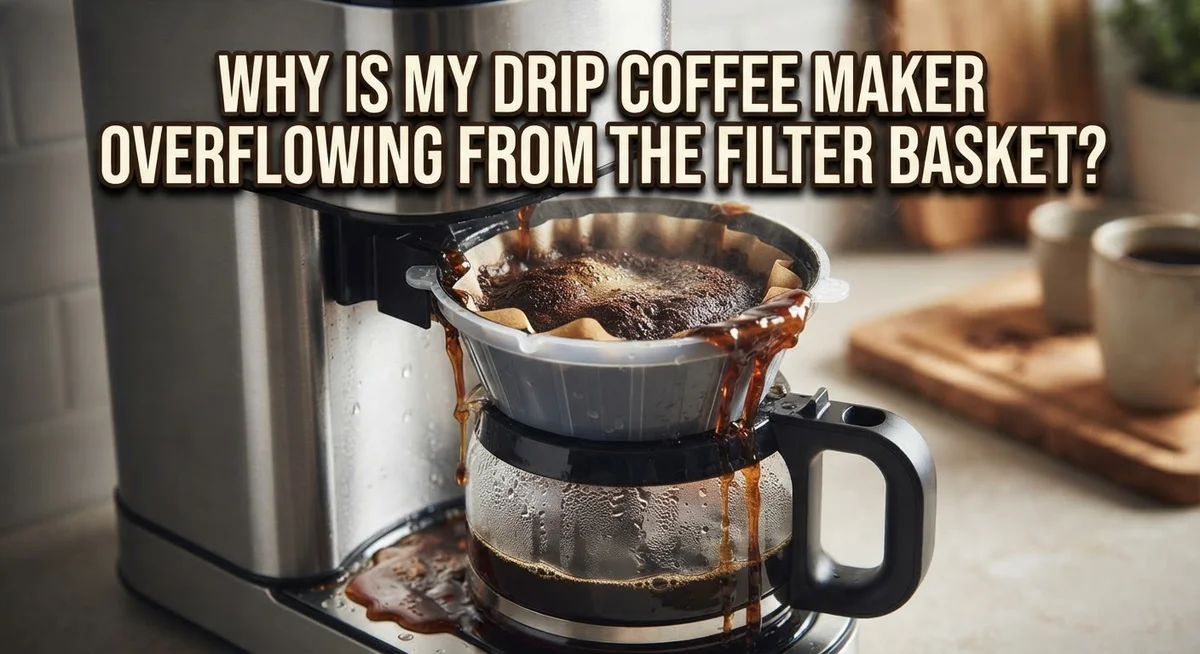
Waking up to a coffee spill is not a fun way to start your day. Your drip coffee maker overflows from the filter basket, and coffee grounds float all over your counter.
This problem happens more often than you think. The good news is that it usually points to a simple, fixable issue.
Most overflow problems come down to a few common culprits. Your filter basket might be clogged. Your grounds could be too fine. Or your filter might sit in the wrong position.
Sometimes the issue hides deeper inside your machine. A blocked valve or scale buildup can stop water from draining properly. This causes water and grounds to rise and spill over the edge.
In this article, we will break down why this happens and how to stop it. You will learn about the main causes behind filter basket overflow.
In a Nutshell
- Clogged parts cause most spills. Your showerhead, brew basket, or valve can collect scale and debris over time. This blocks water flow and pushes it up and out.
- Grounds matter a lot. Too many grounds, or grounds that are ground too fine, slow down drainage. Water backs up and spills over the edge.
- Filter position is key. A folded or off center filter can trap water in the wrong spot. This creates pressure that leads to overflow.
- Regular cleaning prevents buildup. Rinse your basket often and descale your machine. This keeps water flowing the way it should.
- Simple fixes work fast. Use a medium grind, measure your grounds, and check your filter each time. These small habits stop most overflow problems.
How Your Drip Coffee Maker’s Filter Basket Is Supposed to Work
Your drip coffee maker’s filter basket works like a simple funnel system. Water flows down from the showerhead at the top, passes through your coffee grounds, and drains through the bottom valve into your carafe.
The showerhead distributes hot water evenly across all your grounds. This ensures proper extraction and even saturation. When working correctly, water soaks through the grounds quickly and smoothly.
The filter itself acts as a barrier. It holds your grounds in place while letting liquid pass through. Paper filters trap fine particles. Mesh filters allow some sediment but let water flow freely.
Below the filter sits the brew basket, which catches all the liquid. This basket has small drainage holes that lead to the bottom valve. The valve controls how fast water exits into your carafe below.
The bottom valve is critical to preventing overflow. It must open and close properly. If this valve gets stuck or blocked, water backs up into your basket instead of draining down.
Here’s what happens during a normal brew cycle. Hot water enters the showerhead. It sprays onto your grounds. Water soaks through and drains into the brew basket. The basket fills slightly as water collects. Then it flows through the bottom valve into your carafe.
This process repeats until all water has passed through your grounds. The entire cycle usually takes five to ten minutes for a full pot.
Understanding this flow helps you spot problems faster. When overflow occurs, something interrupts this smooth cycle. Either water enters too fast, drains too slowly, or gets blocked somewhere along the path. Knowing your machine’s design makes troubleshooting much easier.
Top Reasons Coffee Grounds and Water Overflow From the Basket
Your coffee maker overflows when water and grounds escape from the filter basket instead of draining properly. This happens because something blocks the normal flow path inside your machine.
The most common reason is a clogged showerhead. This part sits at the top and sprays water onto your grounds. When scale buildup or old coffee residue clogs the holes, water pools above the filter instead of spreading evenly. The water has nowhere to go but up and over the sides.
Your brew basket itself can become clogged too. This is the chamber that holds your filter and grounds. Coffee oils and fine particles stick to the walls over time. When the basket gets dirty, water drains slowly or not at all.
The bottom valve mechanism is another culprit. This valve sits beneath everything and controls how fast liquid exits the basket. If debris gets stuck in this valve, drainage stops completely. Your basket fills up fast and overflows within seconds.
Too much coffee or grounds that are ground too fine also cause problems. Fine grounds pack tightly together like a wall. Water cannot pass through easily, so it backs up instead. Even a small amount of extra grounds makes a big difference.
An improperly positioned filter creates overflow too. If your paper filter folds or sits off center, water pools in one spot. The filter cannot catch all the liquid evenly. Water escapes around the edges and into your machine’s casing.
Each of these issues stops water from flowing down through your grounds at the right speed. Understanding which problem affects your machine helps you fix it fast and prevent future spills.
Step-by-Step: Diagnosing the Source of the Overflow
When your drip coffee maker overflows, you need to find the exact source. Start by observing where the water escapes. Does it leak from the sides of the filter basket? Does it pour out from underneath? Does it back up and spill over the top? The location tells you what went wrong.
Check your filter first. Remove the filter basket and look at the paper filter inside. Is it folded against the basket walls? Is it off center or bunched up? A misaligned filter traps water and forces it to overflow. Reposition the filter so it sits flat and centered against all sides of the basket.
Next, inspect the bottom valve. This small opening sits beneath the brew basket. Turn off your machine and let it cool. Carefully remove the brew basket and look down into the valve area. Do you see scale buildup, old grounds, or debris? Any blockage here stops water from draining properly.
Examine your showerhead too. This part sits at the top of the filter basket and sprays water onto your grounds. Mineral deposits or ground particles can clog the small holes. If water pools on top instead of spreading evenly, your showerhead needs cleaning.
Finally, measure your grounds. Too many grounds packed into the basket slow drainage dramatically. Weigh them or use your machine’s recommended scoop. Finely ground coffee also drains slower than medium grind, which can cause overflow during brewing.
Document what you find. Does water back up immediately, or only after several minutes? Does overflow happen every brew or just sometimes? These details help you pinpoint whether you have a cleaning issue, a technique problem, or a combination of both.
How to Properly Clean and Descale the Valve and Showerhead
Your drip coffee maker’s showerhead and bottom valve need regular cleaning to prevent overflow. These two parts work together to control water flow, and when they get clogged, water backs up into your filter basket.
Start by removing the showerhead. Most coffee makers have a showerhead that sits at the top of the brew basket. It looks like a small perforated disc or sprinkler head. Gently unscrew or pull it free, depending on your machine’s design. Check for mineral deposits, coffee residue, or debris stuck in the tiny holes.
Soak the showerhead in equal parts white vinegar and water for 30 minutes. This dissolves mineral buildup that blocks water from flowing evenly. Use a soft brush or old toothbrush to gently scrub the holes. Rinse thoroughly under running water until no vinegar smell remains.
Now clean the bottom valve. This valve sits beneath the brew basket and controls drainage. Unscrew or remove your brew basket to access it. Look for coffee grounds, scale, or debris blocking the opening. Wipe the valve clean with a damp cloth. If mineral buildup is heavy, soak a cloth in vinegar and press it against the valve opening for several minutes.
Run a full descaling cycle through your machine after cleaning both parts. Fill the water reservoir with equal parts vinegar and water. Brew a full pot, then run two pots of plain water through to rinse everything.
Test your machine next. Brew a small pot with your normal coffee amount. Water should flow steadily without backing up. If overflow still happens, the showerhead or valve may need deeper cleaning or replacement.
Best Practices for Filter Placement and Grounds Measurement
Getting the right filter placement and grounds measurement is essential to stop overflow problems. These two factors work together to control how water flows through your coffee maker.
Start by rinsing your filter basket before you add the paper filter. This removes dust and debris that can block water drainage. Once clean, insert your paper filter and make sure it sits flat against all sides of the basket. The filter should have no folds, wrinkles, or gaps where water can escape around the edges.
Proper filter positioning matters more than you might think. Water needs to flow evenly through the grounds. If your filter tilts or bunches up on one side, water pools in the empty space and overflows. Take a moment to center the filter and press it gently into place before adding grounds.
Now measure your coffee grounds carefully. Use a standard measurement like two tablespoons of grounds per six ounces of water. This is your baseline. Many people overfill the basket thinking more coffee means stronger brew, but excess grounds block drainage and cause overflow.
Grind size is equally important. Medium grind works best for most drip coffee makers. Fine grounds pack too tightly together and slow water movement dramatically. Coarse grounds drain too fast and make weak coffee. Medium grind allows water to flow at the right speed through your grounds.
Fill your basket only to the recommended line. Never pack grounds down with a spoon or press them into the filter. Let them sit loosely so water can penetrate evenly. Follow these practices consistently, and overflow problems should disappear during your brew cycles.
Common Mistakes That Lead to Repeated Overflow Issues
Overflowing happens when you skip important steps during setup. Many people make the same mistakes repeatedly without realizing what causes the problem.
Overfilling the basket is the most common error. You might think more coffee means stronger brew, but it actually blocks water flow. The grounds need space for water to pass through evenly. Fill only to the line your machine recommends.
Using the wrong grind size creates major issues. Fine grounds pack tightly together and trap water above them. This pressure builds until liquid spills over the sides. Medium grind allows water to flow at the right speed.
Neglecting maintenance between uses leads to repeated overflow. Old coffee residue and mineral deposits accumulate in hidden spots. This buildup narrows drainage paths and slows water movement. You should clean your basket after each use.
Inserting the filter carelessly blocks proper drainage too. A folded or wrinkled filter creates gaps where grounds escape. These grounds then clog the valve below. Always smooth your filter flat against the basket walls.
Skipping the rinse step before brewing causes problems. Dust and paper particles from the filter can block water flow. A quick rinse removes these materials and prevents clogs.
Ignoring warning signs makes overflow worse over time. If your coffee brews slowly or tastes weak, something is restricting water flow. Address these signs immediately before overflow starts.
The good news is simple. You can stop overflow by following one basic rule: prepare your machine correctly every single time. Consistency prevents problems far better than fixing them later.
Troubleshooting Persistent Overflow Problems
When overflow keeps happening despite your best efforts, you need a systematic approach to find the real culprit.
Start by checking your filter basket’s drainage holes. Look underneath the basket carefully. Sometimes debris or old coffee grounds stick to these openings and block water flow completely. Use a small brush or pipe cleaner to clear each hole. This simple step fixes many persistent overflow problems.
Next, examine your machine’s water distribution system more closely. The showerhead sprays water onto your grounds, but mineral buildup can slow this process significantly. Run a descaling cycle through your maker using equal parts white vinegar and water. This removes scale that narrows water passages and forces water to back up into your filter basket.
Check if your filter sits properly each time you brew. A folded or misaligned filter creates dead zones where water pools instead of draining. Press your filter flat against all sides of the basket before adding grounds. This ensures even water distribution and prevents overflow.
Reduce your grounds amount by about 10 percent and test again. Even if your measurement seems correct, your specific machine might need slightly less coffee. Some makers have tighter basket designs that don’t accommodate standard measurements well.
Finally, inspect the valve beneath your brew basket. This component controls drainage timing. If it moves slowly or sticks, water backs up into your basket. Gently clean around this valve with a damp cloth to remove any stuck particles.
These troubleshooting steps address the most common reasons for persistent overflow. Work through each one methodically, and you’ll identify exactly what’s causing your problem.
Maintenance Habits to Prevent Future Overflows
Regular maintenance habits stop overflow problems before they start. You need to clean your dryer coffee maker consistently to keep water flowing smoothly through the system.
Clean your filter basket after every use. Water and coffee oils leave residue that blocks drainage holes. Rinse the basket with warm water and dry it completely before storing. This simple step prevents buildup that causes overflow.
Descale your machine once a month. Mineral deposits from water accumulate inside the showerhead and valve system. These deposits slow down water flow and force liquid to back up into your filter basket. Use a descaling solution and run it through a full brew cycle, then run plain water through twice to rinse completely.
Check your filter positioning each time you brew. Make sure the paper filter sits flat and centered in the basket. A folded or misaligned filter blocks water from draining properly. Take two seconds to verify the filter opens fully before adding grounds.
Store your coffee grounds in a cool, dry place. Moisture makes grounds clump together and creates drainage blockages. Use grounds within two weeks of opening the bag for best results.
Inspect your machine’s drainage holes monthly. Look for any visible debris or buildup around the basket bottom. Use a small brush or pipe cleaner to clear any blockages you find.
Keep your water reservoir clean too. Empty any remaining water after each use. Stale water sitting in the reservoir can develop mineral deposits and mold that affect your entire brewing system.
These habits take just minutes but save you from messy overflow situations and keep your coffee tasting fresh.
Final Thoughts
Overflow from your filter basket feels frustrating, but the fix is usually simple. Most problems come down to three things: too many grounds, wrong grind size, or a dirty machine.
Small changes make a big difference. Measure your coffee grounds instead of guessing. Choose medium grind coffee for smooth, steady brewing.
Your filter placement matters more than you think. Take a few seconds to check it sits flat and open. This tiny step prevents most overflow disasters.
Clean equipment works better equipment. Regular rinsing and descaling keep water flowing the way it should. Skipping these steps invites clogs and mess.
When overflow happens despite your care, slow down and troubleshoot. Check drainage holes first. Then look at grind size and grounds amount. Finally, inspect the valve for buildup.
Most overflow issues share the same root causes. Once you spot the pattern, fixing it becomes easy. You do not need special tools or expert skills.
Your coffee maker wants to work well for you. Give it clean equipment, proper grounds, and correct filter placement. It rewards you with better coffee and less mess.
Think of these steps as habits, not chores. A quick rinse here and a careful measurement there add up. Over time, you will brew coffee without worry.
Overflow problems feel bigger than they are. With the right grind, right amount, and clean parts, your machine runs smoothly. Trust the process and watch your morning coffee routine improve.
Small efforts now save you from big cleanups later. Keep these tips close, and enjoy consistent, mess free brewing every single day.
Frequently Asked Questions
Why does my filter basket overflow when I use fine ground coffee?
Fine grounds compact together and slow water drainage through your filter. Water pools above the grounds and spills over the basket edges. Use medium grind coffee instead. Medium grind allows water to flow through at the right speed. This simple change stops most overflow problems immediately.
Can an improperly positioned filter cause overflow?
Yes. A filter that’s folded, bunched, or off center creates blocked drainage paths. Water can’t flow down evenly. Check your filter each time before brewing. Make sure it sits flat and centered in the basket. The edges should touch the basket walls smoothly without wrinkles.
What happens if I put too many grounds in the basket?
Excess grounds pack tightly and block water flow. The water has nowhere to go except up and over the sides. Measure your grounds instead of guessing amounts. Start with the standard ratio for your machine’s size. You can always add more grounds next time if the coffee tastes weak.
How does a clogged showerhead cause overflow?
Your showerhead distributes water across the grounds. When mineral scale or debris clogs the holes, water pools and backs up. This forces liquid to overflow from the basket. Descale your machine monthly to remove mineral buildup. Run a descaling cycle according to your machine’s instructions. Check the showerhead holes for visible debris and rinse them clean.
Should I clean the bottom valve if overflow keeps happening?
Absolutely. The valve beneath your brew basket controls drainage. When it gets clogged with scale or coffee residue, water can’t drain properly. Disassemble the basket and inspect this valve. Clean it thoroughly with hot water. Debris trapped here often causes stubborn overflow that other fixes don’t solve.

Hi, I’m Luna! I’m the voice behind CoffeePickster.com. I’m a coffee obsessive who’s spent way too many hours (and dollars) testing coffee makers so you don’t have to. I created this blog to help fellow coffee lovers find the right gear without the guesswork. Let’s brew something great together!