How to Use a French Press Coffee Maker?
A French press coffee maker sits on kitchen counters around the world, yet so many people struggle to get a great cup out of it. Maybe your coffee turns out bitter, weak, or full of gritty sediment. You are not alone.
The French press is one of the simplest brewing devices ever made, but small mistakes can ruin your cup fast.
The good news? Once you learn the correct technique, the French press delivers some of the richest, most flavorful coffee you will ever taste at home.
This guide walks you through everything you need to know. You will learn the exact coffee to water ratio, the right grind size, the ideal water temperature, and the precise steep time.
Key Takeaways
- Use a coarse grind that looks like sea salt or kosher salt. Fine grinds cause bitter, over extracted coffee and slip through the metal mesh filter, leaving muddy sediment in your cup.
- Heat your water to 195°F to 205°F (90°C to 96°C). Boiling water scorches the grounds and creates harsh flavors. Let your kettle sit for about 30 seconds after boiling to reach the sweet spot.
- Follow a 1:15 coffee to water ratio. This means roughly 30 grams of coffee for every 500 grams (about 17 ounces) of water. Use a kitchen scale for the best accuracy.
- Steep for exactly 4 minutes before pressing. Shorter times produce weak, under extracted coffee. Longer times pull out bitter compounds that overpower the flavor.
- Press the plunger slowly and pour immediately. Leaving brewed coffee in the French press causes it to keep extracting, which makes the last cup taste harsh and bitter. Transfer all the coffee to a separate carafe or mug right after pressing.
- Preheat your French press with hot water before brewing. A cold glass carafe drops the water temperature the moment you pour, and this leads to uneven extraction and flat tasting coffee.
What Is a French Press and How Does It Work
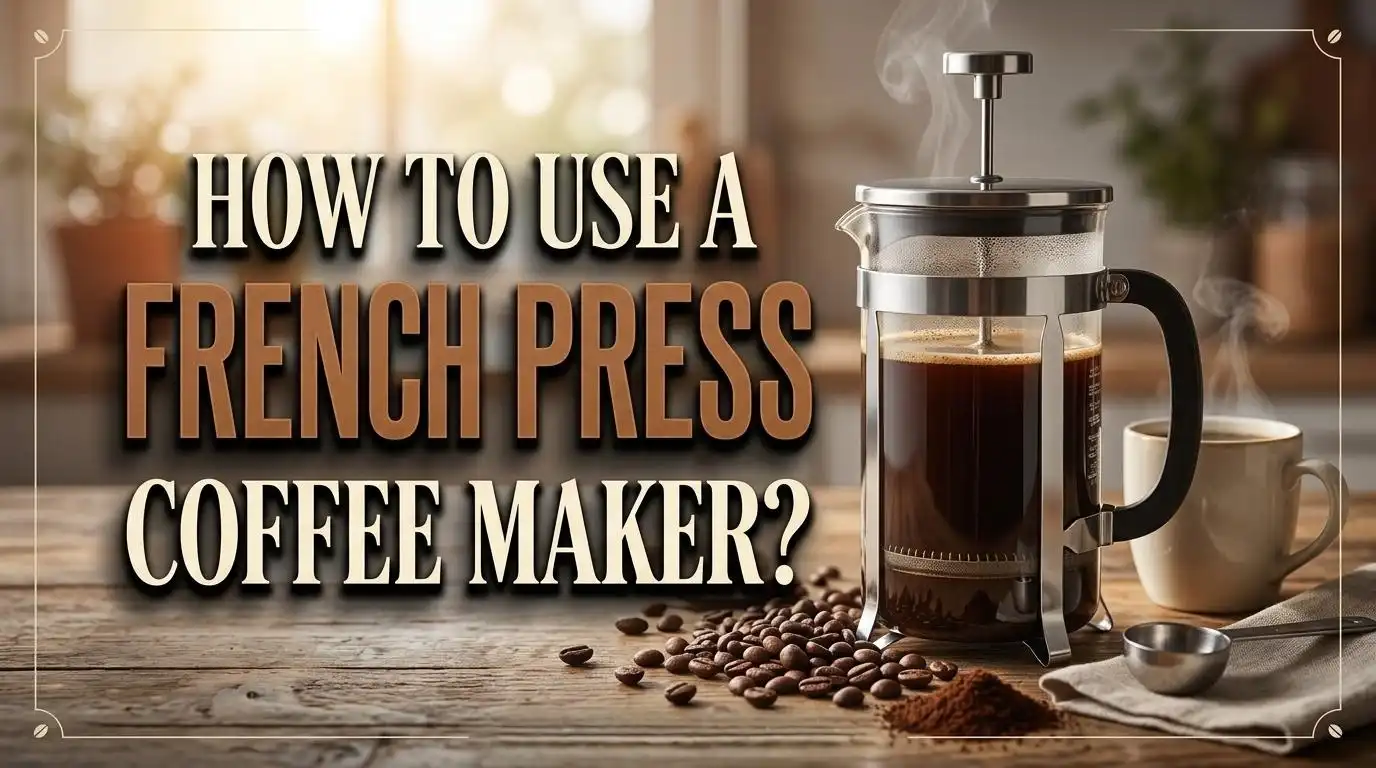
A French press is a manual coffee brewing device made of a glass or stainless steel carafe, a plunger, and a metal mesh filter. It uses a method called full immersion brewing, which means the coffee grounds sit fully submerged in hot water for the entire brewing time.
The process is straightforward. You add coarse coffee grounds to the carafe, pour hot water over them, wait a set amount of time, then push the plunger down. The metal mesh filter separates the grounds from the liquid and pushes them to the bottom. What remains on top is a rich, full bodied cup of coffee.
Unlike drip coffee makers or pour over methods, the French press does not use a paper filter. This is a key difference. Paper filters absorb the natural oils in coffee beans. Those oils carry a huge amount of flavor. The metal mesh filter lets those oils pass through into your cup, which is why French press coffee tastes thicker and more flavorful than most other brewing methods.
The French press goes by several names around the globe. In the UK and some parts of Europe, people call it a cafetière. In Australia and New Zealand, it is known as a coffee plunger. Regardless of the name, the device and the method remain the same everywhere.
Pros: Full bodied flavor, no electricity needed, very affordable, easy to use, portable.
Cons: Sediment in the cup, coffee cools quickly in glass models, requires a separate kettle for heating water.
What You Need Before You Start Brewing
Before you brew your first cup, gather a few essential items. Having everything ready makes the process smooth and ensures consistent results.
You need the French press itself, freshly roasted coffee beans, a burr grinder (or pre ground coarse coffee), a kettle, a kitchen scale, a timer, and a stirring utensil like a wooden spoon or chopstick. Avoid using a metal spoon to stir inside a glass French press because it can crack or chip the carafe.
A burr grinder is important because it produces an even, uniform grind. Blade grinders chop beans unevenly, creating a mix of fine dust and large chunks. The fine particles over extract and make your coffee taste bitter, while the large chunks under extract and add sour notes. A consistent coarse grind eliminates this problem entirely.
A kitchen scale removes all guesswork. Measuring coffee by tablespoons is unreliable because different beans have different densities. A light roast bean weighs more per scoop than a dark roast bean. Using weight instead of volume gives you the same strength every time.
Fresh water also matters more than most people realize. Tap water with heavy chlorine or mineral content can affect the taste of your coffee. Filtered water produces a cleaner, more transparent cup. However, completely distilled water is not ideal either because coffee needs some minerals for proper extraction.
Pros of using a scale and burr grinder: Perfect consistency, repeatable results, full flavor control.
Cons: Additional cost, takes a few extra seconds, requires a small learning curve for beginners.
How to Choose the Right Grind Size
Grind size is one of the most important factors in French press brewing. The correct grind for a French press is coarse, about the size of sea salt or raw sugar crystals. If you pinch the grounds between your fingers, they should feel gritty and distinct, not powdery.
A coarse grind works best because the French press uses a long steep time of about 4 minutes. Finer grounds have more surface area exposed to water, so they extract faster. With a 4 minute steep, fine grounds will over extract and create a bitter, astringent taste. Coarse grounds extract more slowly, which allows the full range of flavors to develop without pulling out harsh compounds.
The other reason is purely practical. The metal mesh filter on a French press has larger holes than a paper filter. Fine grounds slip right through the mesh and end up in your cup as muddy sediment. Coarse grounds stay trapped below the plunger where they belong.
If you buy pre ground coffee labeled “French press grind” from a roaster, that will usually work. But grinding your own beans right before brewing always produces better results. Coffee begins to lose its aromatic compounds within minutes of being ground. Freshly ground coffee smells stronger and tastes brighter because those volatile flavors have not had time to escape.
On most burr grinders, the French press setting falls at the coarser end of the dial. Look for a setting around 7 to 9 on a 10 point scale. Adjust up or down based on taste: if your coffee is bitter, grind coarser. If it tastes sour or weak, grind slightly finer.
The Ideal Coffee to Water Ratio
Getting the ratio of coffee to water right is essential for a balanced cup. The standard French press ratio is 1:15, meaning 1 gram of coffee for every 15 grams of water. This produces a medium strength brew that highlights the flavor of the beans without being too strong or too weak.
For a typical 8 cup French press (which actually holds about 34 ounces or 1 liter), you would use approximately 65 grams of coffee and 1,000 grams of water. For a smaller 3 cup press, use about 20 grams of coffee and 300 grams of water.
If you do not own a scale, a rough guideline is 2 tablespoons of coarse ground coffee per 6 ounces of water. Keep in mind this is an approximation. A scale gives far more accurate and repeatable results.
You can adjust the ratio to suit your personal taste. A 1:12 ratio produces a stronger, bolder cup. A 1:17 ratio gives you a lighter, more delicate brew. Start with 1:15 and move up or down from there based on your preference.
It helps to think of the ratio as a starting point rather than a fixed rule. Different coffee beans extract differently. A light roast might taste best at a slightly different ratio than a dark roast. Experimentation is half the fun of manual brewing.
Pros of weighing: Exact control, consistent taste every morning, easy to scale up or down.
Cons of weighing: Requires a kitchen scale, takes a moment longer than scooping.
What Water Temperature Should You Use
Water temperature directly affects how much flavor you extract from the coffee grounds. The ideal temperature for French press brewing is between 195°F and 205°F (90°C to 96°C). This range extracts the desirable sugars, acids, and oils while leaving behind the harsh, bitter compounds.
Water that is too hot, especially a full rolling boil at 212°F (100°C), will scorch the grounds. This causes over extraction, which pulls out bitter and astringent flavors. Water that is too cool will under extract the coffee, leaving it sour, thin, and lacking depth.
The easiest way to hit the right temperature is simple. Boil your water, then let the kettle sit for about 30 seconds before pouring. This drops the temperature into the ideal range without needing a thermometer. If you have a variable temperature kettle, set it directly to 200°F (93°C).
Some coffee experts, like James Hoffmann, suggest using water right off the boil for light roasts because they are harder to extract. For medium and dark roasts, slightly lower temperatures around 190°F to 195°F work well because these beans are more soluble and extract faster.
Pros of using a variable temperature kettle: Precise control, no guessing, works for multiple brew methods.
Cons: More expensive than a standard kettle, not strictly necessary for good results.
If you do not have a thermometer or a fancy kettle, the 30 second rest after boiling method works perfectly for most situations. Do not stress over exact numbers. Even a rough estimate will produce a dramatically better cup than pouring boiling water straight over your grounds.
Step by Step Instructions for Brewing
Here is the complete process to brew French press coffee from start to finish. Follow each step closely for the best results.
Step 1: Preheat the French press. Fill the carafe with hot water and let it sit for about 30 seconds. This warms the glass so it does not steal heat from your brewing water. Discard the preheating water before adding coffee.
Step 2: Measure and grind your coffee. Weigh out your desired amount of coffee (about 30 grams for 500 grams of water). Grind it to a coarse consistency that resembles sea salt.
Step 3: Add the grounds to the carafe. Dump the coarse grounds into the empty, preheated French press. Give the carafe a gentle shake to level the coffee bed.
Step 4: Pour the hot water. Start a timer and pour water heated to 195°F to 205°F over the grounds. Pour steadily and make sure all the grounds get saturated. Fill the carafe to the desired level.
Step 5: Stir gently. After about 30 seconds, give the mixture one gentle stir with a wooden spoon or chopstick. This ensures all the grounds are fully immersed and brewing evenly. Do not stir aggressively because too much agitation causes over extraction.
Step 6: Place the lid and wait. Set the plunger on top of the carafe without pressing it down. This traps heat inside. Let the coffee steep for a total of 4 minutes from the moment you poured the water.
Step 7: Press slowly. When the timer hits 4 minutes, press the plunger down with steady, even pressure. This should take about 15 to 20 seconds. If the plunger feels very hard to push, your grind is too fine. If it drops with no resistance, your grind is too coarse.
Step 8: Pour immediately. Transfer all the coffee into your mug or a separate carafe right away. Do not leave it sitting in the French press.
Why You Should Preheat Your French Press
Preheating your French press is a small step that makes a big difference. A cold glass carafe can drop your water temperature by 10°F or more the instant you pour. That sudden temperature drop throws off the extraction and leads to flat, under developed flavors.
The fix is easy and takes less than a minute. Simply fill the French press with hot tap water or boiling water and let it sit for 20 to 30 seconds. Then pour it out. Your carafe is now warm and ready to maintain the correct brewing temperature throughout the steep time.
This step becomes especially important during colder months. In winter, a glass French press sitting on a cold countertop can be surprisingly chilly. Preheating brings the glass up to temperature so it acts as an insulator rather than a heat sink.
Some people also preheat their coffee mugs using the same method. A warm mug keeps your coffee hotter for a longer time after serving. It is a small touch that elevates the entire experience.
Pros: Better temperature stability, more even extraction, improved flavor.
Cons: Requires an extra 30 seconds, uses a small amount of additional water.
Stainless steel French press models retain heat better than glass ones, so preheating is slightly less critical with metal. However, it still helps and is worth doing regardless of the material.
How Long Should You Steep French Press Coffee
The standard steep time for French press coffee is 4 minutes. This length gives the water enough time to extract the right balance of sugars, acids, and oils from the coarse grounds. Most coffee professionals agree that 4 minutes is the sweet spot for a traditional French press brew.
Steeping for less than 4 minutes usually results in under extraction. The coffee will taste sour, thin, and watery because the water has not had enough time to dissolve the flavorful compounds. If you find your coffee weak, make sure you are actually timing the full 4 minutes rather than guessing.
Steeping for longer than 4 minutes pushes the extraction too far. The water starts pulling out bitter, tannic compounds that overpower the pleasant flavors. This is the most common cause of harsh tasting French press coffee. People walk away to do something else, forget about the timer, and come back to an over extracted mess.
James Hoffmann’s popular French press method suggests steeping for longer, around 5 to 8 minutes, combined with a technique of skimming the top and not plunging at all. This alternative method produces a cleaner, less gritty cup, but it deviates from the traditional approach and works better for experienced brewers.
Pros of the 4 minute method: Simple, reliable, works with any coarse grind, easy to remember.
Cons: Requires strict timing, does not leave room for multitasking during brewing.
Use a phone timer or a kitchen timer every single time you brew. Consistency is the key to repeatable, great tasting coffee.
Why You Must Pour Immediately After Pressing
One of the biggest mistakes people make with a French press is leaving the coffee in the carafe after pressing. The plunger does not stop the brewing process. Even after you push the grounds to the bottom, the coffee continues to extract because the grounds remain in contact with the liquid.
This ongoing extraction pulls out increasingly bitter and unpleasant flavors over time. The first cup you pour might taste wonderful, but the second cup poured 10 minutes later will taste noticeably harsher. By the third cup, the coffee can be almost undrinkable.
The solution is simple. Pour all of the coffee out of the French press immediately after pressing. If you are making more coffee than you can drink in one cup, transfer the extra into a thermal carafe or an insulated mug. This stops the extraction and preserves the flavor profile of that perfect 4 minute brew.
Some people worry about the small amount of sediment at the bottom of the carafe. If you want to leave that last half inch of liquid behind, that is completely fine. That little bit at the bottom contains the most sediment and the most extracted compounds, so skipping it actually improves the overall taste.
Pros of immediate pouring: Clean flavor, no bitterness from over extraction, consistent taste from first sip to last.
Cons: Requires a second vessel if you brew more than one cup, coffee cools slightly faster outside the press.
Common Mistakes and How to Fix Them
Even experienced coffee drinkers make errors with the French press. Here are the most frequent problems and their fixes.
Using the wrong grind size is mistake number one. If your coffee tastes bitter and has muddy sediment at the bottom of your cup, your grind is too fine. Switch to a coarser setting. If it tastes weak and sour, grind slightly finer. The grind should look like coarse sea salt.
Using stale coffee beans is another big culprit. Coffee beans are at their best within 2 to 4 weeks of roasting. Pre ground coffee from a grocery store shelf may have been ground months ago. Those volatile aromatic compounds disappear quickly after grinding. Buy whole beans and grind fresh for each brew.
Ignoring water quality silently sabotages your cup. Tap water with strong chlorine flavors transfers directly into the coffee. Use filtered water for a clean tasting result. Avoid distilled water because coffee needs some dissolved minerals to extract properly.
Pressing too hard or too fast can stir up sediment and force fine particles through the mesh filter. Press slowly with steady, even pressure over 15 to 20 seconds.
Skipping the preheat step leads to temperature loss. Always warm your carafe before brewing. This alone can make a noticeable improvement in flavor.
Using boiling water scorches the grounds and creates a burned, acrid taste. Let the water cool for 30 seconds after boiling or use a thermometer to aim for 195°F to 205°F.
Pros of identifying and fixing mistakes: Immediate improvement in taste, no additional equipment needed, builds brewing confidence.
Cons: Requires some trial and error, results vary depending on the beans and grinder used.
How to Clean Your French Press Properly
Cleaning your French press after each use is essential. Old coffee oils and grounds left behind turn rancid and create stale, off putting flavors in your next brew. A clean press produces a clean tasting cup every time.
Start by removing the used grounds. Add some water to the carafe and swirl it around to loosen the grounds from the bottom. Pour the mixture through a fine mesh strainer over your sink or compost bin. Do not dump coffee grounds directly down the drain because they can clog your pipes over time.
Next, disassemble the plunger. Most French press plungers consist of three parts: the metal mesh filter screen, a cross plate, and a spiral plate. Unscrew these pieces and rinse each one under warm running water. Use a small amount of mild dish soap to remove the oily residue that clings to the mesh.
Give the glass carafe a good wash with warm soapy water and a soft sponge. Avoid abrasive scrubbers because they can scratch the glass. Rinse everything thoroughly to remove all soap residue, which can affect taste.
For a deeper clean once a week, soak all the parts in a solution of equal parts white vinegar and warm water for about 15 minutes. This dissolves mineral buildup and stubborn coffee oil deposits. Rinse well afterward.
Let all parts air dry completely before reassembling. Storing a damp French press encourages mold and mildew growth.
Pros of regular cleaning: Better flavor, longer equipment life, no rancid oil buildup.
Cons: Takes a few minutes each time, requires disassembly.
French Press vs Other Brewing Methods
The French press is just one of many ways to brew coffee at home. Understanding how it compares to other methods helps you decide if it is the right choice for your taste and lifestyle.
French press vs drip coffee maker: A drip machine is more convenient because you set it and walk away. However, the paper filter removes oils and produces a thinner cup. The French press delivers a fuller body and richer mouthfeel but requires more hands on attention. If you value flavor over convenience, the French press wins.
French press vs pour over: Pour over methods like the V60 or Chemex use paper filters and produce a clean, bright cup that highlights delicate flavor notes. The French press produces a heavier, oilier cup that emphasizes body and depth. Pour over requires more technique and attention to pouring speed. The French press is more forgiving.
French press vs espresso: Espresso uses high pressure and fine grounds to create a concentrated shot in about 25 to 30 seconds. The French press uses immersion and coarse grounds over 4 minutes. These are very different drinks. Espresso is intense and concentrated. French press coffee is mellow and full. They serve different purposes entirely.
French press vs AeroPress: The AeroPress is compact, fast, and produces a clean cup with low sediment. It is more portable and easier to clean. The French press makes larger batches and has a more traditional feel. The AeroPress is better for single servings and travel.
Each method has its place. The French press remains a favorite because of its simplicity, low cost, and ability to produce a deeply flavorful cup with minimal equipment.
Tips to Improve Your French Press Coffee
Once you have the basics down, these additional tips will help you refine your technique and take your coffee to the next level.
Buy fresh, specialty grade beans. The quality of your beans matters more than any other single variable. Look for a roast date on the bag rather than a “best by” date. Beans roasted within the past 2 to 3 weeks will produce the most vibrant flavors.
Experiment with your ratio. Start at 1:15 and adjust from there. Everyone’s palate is different. Maybe you prefer a bold 1:12 ratio, or perhaps a lighter 1:17 suits your taste better. Keep notes on what you try so you can repeat the combinations you enjoy.
Try the James Hoffmann method. Instead of plunging at 4 minutes, let the coffee steep for 5 to 8 minutes. Then use a spoon to skim off the foam and floating grounds from the surface. Place the plunger just at the surface without pressing down and pour gently. This method produces a remarkably clean cup with less sediment.
Use a timer every time. Human time perception is unreliable. What feels like 4 minutes might actually be 2 or 6. A timer eliminates this variable completely.
Store your beans properly. Keep them in an airtight container at room temperature away from light, heat, and moisture. Do not store them in the refrigerator or freezer for daily use because moisture from condensation degrades the beans.
Serve with warmed mugs. Rinse your mugs with hot water before pouring. This keeps your coffee hotter for longer and feels more luxurious in your hands.
Frequently Asked Questions
How much coffee do I put in a French press for one cup?
For a single 8 ounce cup of coffee, use about 15 grams (roughly 2 tablespoons) of coarse ground coffee and 225 grams (about 8 ounces) of hot water. This follows the standard 1:15 ratio and produces a well balanced cup. Adjust the amount slightly if you prefer your coffee stronger or lighter.
Can I use regular pre ground coffee in a French press?
You can, but it is not ideal. Most pre ground coffee sold in stores is ground for drip machines, which means it is a medium or medium fine grind. This grind is too small for a French press and will cause over extraction, bitterness, and excessive sediment. If possible, buy coarse ground coffee or grind your own beans at home.
Why does my French press coffee taste bitter?
Bitterness almost always comes from over extraction. The three most common causes are water that is too hot, a grind that is too fine, and a steep time that is too long. Check each of these variables. Lower your water temperature to around 200°F, switch to a coarser grind, and stick to a strict 4 minute steep time.
Is French press coffee bad for your health?
French press coffee contains higher levels of cafestol and kahweol, two oils that can raise LDL cholesterol levels. Paper filtered coffee removes most of these oils. If you have cholesterol concerns, consult your doctor. For most healthy adults, drinking French press coffee in moderation is perfectly fine and is enjoyed daily by millions of people worldwide.
How often should I replace my French press filter?
The metal mesh filter on a French press is durable and lasts a long time with proper care. Inspect it regularly for tears, bent edges, or loose connections. A damaged filter lets grounds slip through into your cup. Most people replace their filter screen every 1 to 2 years depending on usage. Cleaning it thoroughly after each use extends its lifespan significantly.
Can I make cold brew coffee in a French press?
Yes, the French press is an excellent tool for making cold brew. Use coarse ground coffee at a 1:8 ratio (stronger because it will be diluted). Add room temperature or cold water, stir gently, place the lid on without pressing, and refrigerate for 12 to 24 hours. Press the plunger, pour over ice, and dilute with water or milk to taste. It produces a smooth, low acid concentrate that is perfect for warm weather.

Hi, I’m Luna! I’m the voice behind CoffeePickster.com. I’m a coffee obsessive who’s spent way too many hours (and dollars) testing coffee makers so you don’t have to. I created this blog to help fellow coffee lovers find the right gear without the guesswork. Let’s brew something great together!