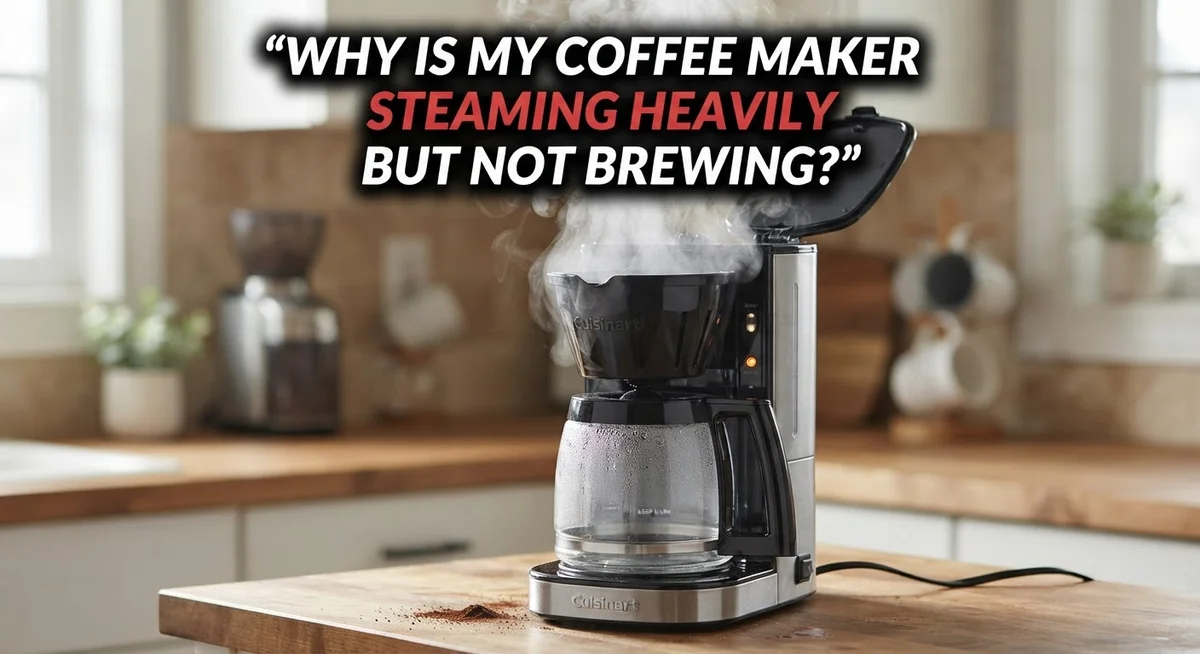
Why Is My Coffee Maker Steaming Heavily But Not Brewing?
You wake up ready for your morning coffee. You hear loud hissing and see steam pouring out of your machine. But no coffee fills your cup.
This problem happens to many coffee lovers. Your machine sounds like it works hard. Yet it fails at its main job: brewing coffee.
Heavy steaming without brewing usually points to a few common culprits. Mineral deposits often build up inside your machine over time. Coffee oils can clog important parts too.
This guide walks you through the real reasons behind this steamy problem. You will learn simple troubleshooting steps to try today.
By the end, you will understand your coffee maker better. You will also know how to get back to brewing fresh cups again.
In a Nutshell
Mineral buildup from hard water clogs internal parts. This blocks water flow and creates extra steam pressure.
Worn rubber gaskets fail to seal properly. Steam escapes instead of pushing water through the coffee grounds.
Clogged filters or spray heads stop water from reaching your coffee. This forces steam to build up with nowhere to go.
Wrong grind size can cause pressure problems. Too fine or too coarse grounds affect how water flows through your machine.
Improper assembly after cleaning often causes this issue. Parts that are not seated correctly break the seal.
Regular cleaning prevents most of these problems. Descaling and washing parts keeps your machine running smoothly.
How Your Coffee Maker Is Supposed to Work
Your coffee maker follows a simple process to brew your morning cup. Water enters a reservoir and heats to the ideal temperature range of 195 to 205 degrees Fahrenheit. This hot water is crucial for extracting the coffee’s flavor and oils properly.
Once heated, the water travels through internal tubes to reach the showerhead. The showerhead sits above your coffee grounds and sprays hot water evenly across them. This even distribution helps extract maximum flavor from every coffee particle. The water then drips down through the grounds and into your brew basket.
The brew basket holds your coffee grounds and has small holes at the bottom. These holes allow brewed coffee to pass through while keeping grounds in place. Water flows down through the grounds, absorbs their flavor, and becomes your finished coffee. It then drips into your carafe or cup below.
A rubber gasket creates a watertight seal inside your machine. This seal keeps water moving in the right direction through the system. Without a proper seal, water escapes as steam instead of flowing through your grounds.
The entire process relies on steady water pressure and unblocked pathways. When everything works correctly, you get a smooth, consistent brew. Water moves through your grounds at the right speed, extracting flavor without over or under brewing.
Your machine’s design depends on clean internal parts and proper assembly. Mineral deposits, coffee oils, or debris can block these pathways. When water cannot reach your grounds, pressure builds up and escapes as steam instead. This is why heavy steaming without actual brewing usually signals a blockage or seal problem rather than a major mechanical failure.
Understanding this basic process helps you identify what goes wrong when your machine steams instead of brews.
Top Causes of Heavy Steaming Without Brewing
Mineral deposits and coffee oil buildup inside your machine are the most common culprits. Hard water leaves behind calcium and magnesium that accumulate over time. These deposits block the showerhead and internal tubes, forcing water to escape as steam instead of flowing through your grounds.
A faulty rubber gasket seal is another major issue. This seal keeps water pressurized inside the brewing chamber. When it cracks or wears out, pressure escapes and steam vents upward instead of pushing water down through your coffee.
Blocked filters or spray heads stop water from reaching your grounds properly. Coffee oils and sediment can clog these small openings. You might see water pooling above the brew basket instead of dripping through.
Wrong grind size creates pressure problems too. If your grounds are too fine, they compact and block water flow. Your machine then builds up steam pressure and releases it through vents rather than forcing it through the coffee.
Improper assembly after cleaning causes this issue frequently. Many people forget to reinstall components correctly. A misaligned brew basket or loose gasket allows water to bypass your grounds entirely.
The pressure buildup from these blockages is key. Your machine is designed to maintain steady water pressure. When internal pathways get blocked, pressure rises and forces water to escape as steam. This is your machine’s way of releasing excess pressure safely.
The good news is that most of these causes are preventable. Regular cleaning removes mineral deposits and oil buildup. Checking your rubber gasket ensures it seals properly. Verifying correct assembly before brewing catches mistakes early.
Pay attention to your water quality too. Soft water prevents mineral accumulation better than hard water. If your area has hard water, descaling your machine monthly makes a real difference in performance and prevents this steaming problem from returning.
Step-by-Step Troubleshooting Guide
Start by checking if your machine is assembled correctly. Many heavy steaming issues happen after cleaning when parts aren’t put back properly. Verify that the brew basket sits flush against the rubber gasket. The gasket must create a tight seal, or water will escape as steam instead of flowing through your grounds.
Next, inspect the showerhead directly. This component sits above your coffee grounds and distributes water evenly. Remove it carefully and look for blockages. Coffee oils and mineral deposits accumulate here over time. Hold it up to light and check if water holes appear clear. If you see buildup, soak the showerhead in hot water for 15 minutes, then use a soft brush to clean each opening gently.
Now examine the rubber gasket itself. Press it with your finger to feel if it’s still flexible. A worn or hardened gasket won’t seal properly, allowing steam to escape around the edges. If it feels stiff or cracked, this is likely your culprit.
Check your coffee grind size next. Water pressure builds up when grounds are too fine. This pressure forces steam out instead of allowing steady brewing. Use a medium grind size unless your machine’s manual specifies otherwise.
Run a cleaning cycle with water only (no coffee). Watch carefully to see where water flows. If steam escapes from unexpected areas, you’ve found a seal problem. If water drips slowly or not at all, you have a blockage.
Finally, verify your water quality. Hard water leaves mineral deposits that clog internal pathways. If you have hard water, consider using filtered water to slow mineral buildup.
Work through these checks systematically. Most heavy steaming problems resolve once you address assembly, seals, or blockages. These are all fixable issues that don’t require professional repair.
How to Deep Clean Your Machine’s Key Components
Your coffee maker’s internal components collect mineral deposits and coffee oils over time. These buildups block water pathways and force steam to escape instead of brewing your coffee properly.
Start by removing the brew basket from your machine. Rinse it thoroughly under warm running water. Use a soft brush to scrub away any dried coffee residue or mineral deposits stuck to the basket’s surface and small holes. Let it dry completely before reassembling.
Next, focus on the showerhead. This component sits at the top of your brew chamber and distributes water over your grounds. Remove it carefully according to your machine’s manual. Soak the showerhead in hot water for 15 to 20 minutes to loosen mineral buildup. Use a thin brush or pipe cleaner to clear any blocked holes. Rinse thoroughly until water flows freely through each opening.
The rubber gasket seal deserves special attention. This ring creates the watertight seal that maintains proper brewing pressure. Remove it gently and inspect for cracks, tears, or permanent deformation. Clean it with warm soapy water and a soft cloth. Pay close attention to the gasket’s surface because even small damage prevents proper sealing.
If your machine has a pod adapter or filter basket, remove and wash these parts separately. Mineral deposits often hide in crevices where water doesn’t reach during normal brewing.
For deeper cleaning, run a cycle with just hot water and no coffee grounds. This flushes loosened debris from internal tubes and pathways. Repeat this water only cycle two or three times until the water runs clear.
Allow all components to air dry completely. Reassemble your machine carefully, ensuring each part sits in its correct position. Improper reassembly after cleaning frequently causes the steaming problem to continue even after you’ve cleaned everything.
Common Mistakes That Cause Steaming Issues
Many people skip regular cleaning, and this is the biggest mistake. Mineral deposits and coffee oils build up inside your machine over time. These deposits block water pathways and force pressure to escape as steam instead of brewing your coffee.
Using the wrong grind size creates another common problem. If your grounds are too fine, water cannot flow through them properly. The machine builds pressure, and steam shoots out while little to no coffee drips into your cup. Coarser grounds allow water to pass through at the right speed.
Improper assembly after cleaning trips up many coffee drinkers. You might forget to seat the rubber gasket correctly or place the brew basket at an angle. Even small misalignment prevents water from reaching your grounds. Always double check that every part clicks or fits snugly into place before brewing.
Ignoring water quality causes hidden problems. Hard water with high mineral content accelerates buildup inside your machine. This happens faster than you might expect. Soft water or filtered water reduces mineral accumulation significantly.
Neglecting the showerhead is another frequent oversight. This small component distributes water evenly over your grounds. When it clogs with debris, water pools and pressure builds. A quick inspection and rinse prevents this issue.
Worn rubber gaskets fail silently. Many people don’t realize their seal has degraded until steaming starts. A faulty gasket lets pressure escape before water reaches your grounds.
Finally, some users don’t clean the spray head or pod adapter regularly. These parts trap coffee oils and small debris. Over weeks, this accumulation blocks water flow completely.
The good news is simple: most steaming problems are preventable through basic maintenance. Clean your machine weekly, use the correct grind size, assemble it properly, and monitor your water quality. These steps stop heavy steaming before it starts.
Preventive Maintenance Tips for Long-Term Performance
Regular maintenance keeps your coffee maker working smoothly and prevents the heavy steaming problem from returning. The key is staying consistent with your cleaning routine.
Clean your machine at least once a week. This simple habit removes mineral deposits and coffee oils before they build up inside. Weekly cleaning takes just 10 minutes and saves you from bigger problems later.
Check your water quality regularly. Hard water contains minerals that accumulate quickly in your machine. If you notice white buildup on components, your water is likely the culprit. Consider using filtered or distilled water to reduce mineral deposits over time.
Inspect rubber gaskets monthly. These seals wear out slowly, and you might not notice until steaming starts. Look for cracks, discoloration, or hardening. Replacing a worn gasket early prevents steam from escaping where it shouldn’t.
Run a cleaning cycle once every two weeks. Use hot water only, no coffee grounds. This flushes out loose debris and keeps your brew path clear. Let all parts air dry completely before reassembling.
Store your machine properly. Keep it in a dry location away from moisture. Humidity speeds up seal degradation and promotes mineral buildup. Empty the water reservoir if you won’t use the machine for several days.
Use the correct grind size for your machine type. Fine grounds pack too tightly and block water flow. Coarse grounds brew too quickly. Check your machine’s manual for the recommended size.
Verify assembly after every cleaning. Improper reassembly causes pressure problems and steam escape. Take photos before disassembling so you remember exactly how pieces fit together.
Replace filters on schedule. Clogged filters restrict water flow and create pressure buildup. Follow your machine’s manual for filter replacement timing.
These preventive steps cost almost nothing and take minimal effort. They keep your machine performing reliably and prevent expensive repairs down the road.
When to Seek Professional Repair or Replacement
If your coffee maker continues to steam heavily without brewing after you’ve tried basic cleaning, it’s time to consider professional help. Know when DIY troubleshooting ends and expert repair begins.
A professional technician can diagnose internal issues you cannot see. They check pressure valves, heating elements, and internal pathways for blockages. They also inspect the pump system to ensure water flows correctly through your machine. These internal components often cause steaming problems that cleaning alone won’t fix.
Consider professional repair if your machine is relatively new or still under warranty. Repairs cost less than replacement in these cases. Technicians can replace worn gaskets, unclog internal tubes, and recalibrate pressure settings. They have specialized tools to clean mineral deposits from places you cannot reach.
However, replacement makes more sense in certain situations. If your machine is very old, repairs may cost nearly as much as a new one. If multiple components have failed, the total repair bill can exceed replacement costs. Machines that have been repaired multiple times often fail again soon after.
Ask yourself these questions before deciding. How old is your machine? Do you have warranty coverage? What is the estimated repair cost? How often do you use your coffee maker?
If repairs are expensive and your machine is five years or older, replacement is usually the better choice. Newer machines often have better energy efficiency and improved brewing technology. They also come with fresh warranties.
Before you visit a repair shop, document the problem. Describe when steaming started, what you’ve already tried, and how long you’ve owned the machine. This information helps technicians diagnose issues faster.
The key is acting quickly. Continued steaming with no brewing can damage internal components further. Delaying repair or replacement wastes water, electricity, and your time each morning. Get professional evaluation soon to restore your coffee maker to working order.
Final Thoughts
Heavy steaming without brewing feels frustrating. But it rarely means your machine is broken beyond repair.
Most causes come down to simple issues. Mineral buildup, worn seals, and clogged parts create pressure problems inside your machine.
Steam escapes because water cannot flow through blocked paths. This creates that hissing sound instead of fresh coffee.
The fixes are usually easy. Regular cleaning removes mineral deposits before they cause trouble. Checking seals monthly catches problems early.
Water quality matters more than people think. Hard water speeds up mineral buildup inside your machine. Filtered water helps your coffee maker last longer.
Grind size also plays a role. The wrong grind creates uneven pressure and triggers steaming issues.
Assembly mistakes happen often too. After cleaning, machines need correct reassembly. A misplaced part can cause steam to escape instead of brewing properly.
Think of your coffee maker like any appliance. It needs consistent care to work well. Skipping maintenance leads to bigger problems over time.
The good news stays simple. Most steaming issues respond well to basic troubleshooting. You do not need special tools or advanced skills.
Start with cleaning the showerhead and gasket. Check your brew basket for blockages. Verify your assembly matches the manual.
These small steps solve most problems. If steaming continues after trying these fixes, professional help becomes necessary.
Weigh repair costs against your machine’s age and value. Newer machines under warranty deserve repair attention. Older machines might need replacement instead.
Your coffee maker gives you signals through steam and sound. Listen to these signals early. Address small issues before they become expensive problems.
Consistent care prevents most steaming headaches. A few minutes each week saves you frustration later. Your morning coffee routine stays smooth and reliable.
Take action now rather than waiting. Your coffee maker will thank you with better performance and longer life.
Frequently Asked Questions
Why does my coffee maker steam heavily but produce little to no coffee?
Heavy steaming with minimal coffee output usually means water cannot flow through the brew basket properly. This happens when mineral deposits, coffee oils, or debris block the internal pathways. Pressure builds up inside the machine, forcing steam to escape instead of brewing your coffee. The showerhead or rubber gasket seal may also be damaged or clogged.
Check your brew basket first. Remove it and look for blockages. Clean the showerhead thoroughly under running water. If you see mineral buildup, soak these parts in a cleaning solution designed for coffee makers.
Can hard water cause heavy steaming without brewing?
Yes. Hard water contains minerals like calcium and magnesium that accumulate inside your machine over time. These deposits narrow the water passages and reduce flow. Your machine works harder to push water through, creating excess steam as a result.
Water quality directly affects brewing performance. If you live in an area with hard water, descale your machine every two weeks instead of monthly. This prevents mineral buildup before it causes problems. Consider using filtered water to slow down mineral accumulation.
What should I check if cleaning doesn’t fix the steaming problem?
Inspect the rubber gasket seal around the brew basket. A worn or cracked gasket allows water to escape as steam instead of flowing through the coffee grounds. Remove the gasket and examine it closely for cracks, discoloration, or hardening.
Also verify that you assembled your machine correctly after cleaning. Improper assembly prevents water from reaching the grounds. Check your user manual to confirm each component sits in the right position. Reassemble slowly and ensure everything clicks into place.
Does grind size affect steaming and brewing issues?
Absolutely. Using grind size that is too fine creates a dense puck of coffee grounds. Water cannot penetrate this barrier easily. Pressure builds up, and steam escapes without brewing your coffee properly.
Match your grind size to your machine type. Espresso machines need fine grounds. Drip coffee makers work best with medium grounds. Pod machines require specific pod sizes. Check your machine’s manual for the recommended grind size. Adjusting this single factor often solves steaming problems immediately.

Hi, I’m Luna! I’m the voice behind CoffeePickster.com. I’m a coffee obsessive who’s spent way too many hours (and dollars) testing coffee makers so you don’t have to. I created this blog to help fellow coffee lovers find the right gear without the guesswork. Let’s brew something great together!