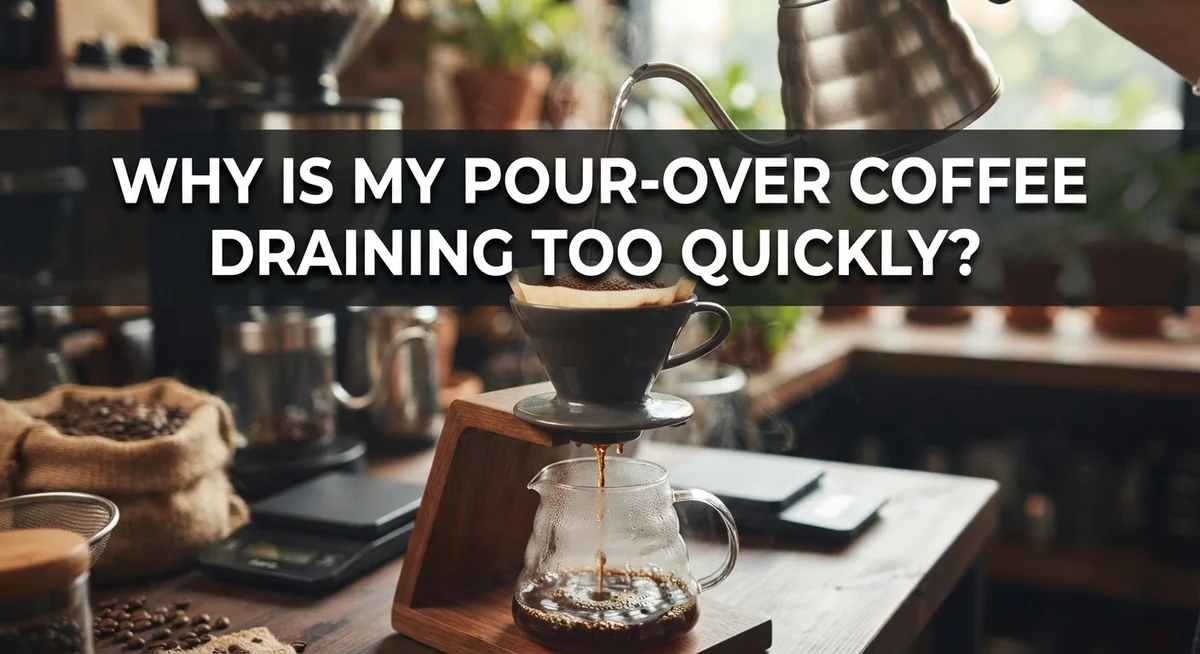
Why Is My Pour-Over Coffee Draining Too Quickly?
Your pour-over coffee finishes fast. Too fast. You watch the water rush through the grounds in seconds, and the result tastes thin and sour.
This is a common problem for home brewers. It happens when water moves through the coffee bed too quickly. The coffee never gets enough contact time to release its full flavor.
The main culprit is usually your grind size. Coarse grounds create bigger gaps. Water finds the path of least resistance and drains right through.
But grind size is not the only factor. Your pouring technique matters too. Pouring all your water at once creates a tall column that drains faster than smaller pours.
In this article, we will explore why your coffee drains too quickly. You will learn how grind size affects extraction. We will also cover pouring techniques that slow things down.
By the end, you will know how to fix a fast drain and brew a better cup. You will also learn how to find that sweet spot between under extraction and bitterness. Let’s get your pour-over dialed in.
In a Nutshell
- Grind size is the top cause. Coarse grounds let water rush through the coffee bed too fast.
- Water column height matters. Pouring too much water at once creates a tall column that drains quickly.
- Split your pours. Smaller, more frequent pours slow down the flow and improve extraction.
- Water temperature counts too. Use water near boiling so heat stays consistent during the brew.
- Adjust in small steps. Make tiny grind changes and test each brew before changing again.
- Watch your total brew time. A rushed brew tastes thin, acidic, and watery.
What Fast Drainage Means for Your Brew
When your pour-over coffee drains too quickly, you get a weak, acidic cup instead of a smooth, balanced brew. Water passes through the coffee grounds without spending enough time extracting flavor, oils, and body.
What exactly happens during fast drainage? Water crashes straight through your coffee bed rather than filtering slowly. The grounds don’t have time to release their best qualities. You end up with a thin, sour taste that feels hollow on your palate.
A rushed brew typically finishes in under two minutes. The ideal pour-over takes three to four minutes. This extra time allows water to pull out the right amount of soluble compounds from your grounds.
Why does this matter for your final cup? Fast drainage means under-extraction occurs. Your coffee tastes acidic and watery because only the quick-dissolving acids came through. The deeper, richer flavors stayed locked inside the grounds.
Think of it like steeping tea. If you dunk a tea bag for five seconds, the water barely changes color. Leave it for three minutes, and you get a proper cup. Coffee works the same way.
The physical impact on your brewer When water moves too quickly, it also channels. This means water finds paths of least resistance through your coffee bed instead of flowing evenly. Some grounds get over-extracted while others barely see water.
You’ll notice this problem immediately when you taste sourness or thinness. The brew feels incomplete and lacks sweetness. Some drinkers describe it as “one-dimensional” or “hollow.”
Understanding fast drainage helps you fix the issue. You now know the problem isn’t just bad coffee beans or water quality. Your brewing method itself needs adjustment. Small changes to your grind size or pour technique can transform your results. The good news? This problem has simple, practical solutions you can test today.
The Main Culprit: Grind Size
Your grind size directly controls how fast water moves through your coffee bed. When your grounds are too coarse, water finds the path of least resistance and rushes straight through without proper contact.
Coarse grounds create large gaps between particles. Water doesn’t need to slow down or linger. Instead, it channels through these spaces like water through gravel. Your coffee never gets the time it needs to release its flavors and oils. The result is a thin, acidic, watery cup that tastes incomplete.
The ideal grind for pour-over should resemble fine sand or table salt. This size forces water to move more slowly through the bed. Each particle gets surrounded by water, allowing proper extraction to happen. Your brew time should typically fall between three and four minutes.
Start by making your grind slightly finer than you currently use. Make small adjustments rather than dramatic changes. Grind a little finer, brew one cup, and taste the result. If it still drains too fast, go finer again. This step-by-step approach helps you find your sweet spot without overshooting into over-extraction.
Be careful not to grind too fine. Finely ground coffee can cause bitterness and astringency. Your water will struggle to pass through, and you’ll end up with a different problem. The goal is finding the middle ground where water flows steadily but not quickly.
Pay attention to how your brew actually tastes. A properly extracted cup has balance and sweetness. Acidity feels bright rather than harsh. Body feels full rather than thin. When you hit the right grind size, these qualities all improve together.
Grind size remains your most powerful tool for controlling drainage speed. Adjust this first before changing anything else about your technique.
How Pouring Technique Affects Drain Speed
Your pouring technique plays a major role in how fast water moves through your coffee grounds. The way you pour directly controls the water column height, which is the amount of water sitting above your coffee bed at any moment.
When you pour all your water at once, you create a tall column. Gravity pulls this water down quickly, forcing it through the grounds without enough contact time. The result is fast drainage and weak extraction. Your coffee tastes thin and acidic because the water didn’t spend enough time pulling out the good flavors.
Split your water into smaller, more frequent pours instead. This technique keeps your water column low and steady. Each pour should be gentle and controlled. Wait for most of the water to drain before adding more. This rhythm gives the grounds proper time to release their flavors and oils.
The ideal pour speed feels deliberate, not rushed. Aim for a brew time between three and four minutes. If your coffee finishes faster than this, your pouring technique combined with your grind size needs adjustment.
Pay attention to your pour pattern too. Pour in circular motions to wet all the grounds evenly. Avoid pouring directly into one spot, which creates channels where water escapes without filtering through the coffee. Uneven pouring wastes your grounds and speeds up drainage.
Start by dividing your total water into three or four separate pours. This simple change often fixes fast drainage problems. Watch how the water level drops between each pour. Once you develop this habit, you’ll notice better flavor and more consistent results.
Your pouring technique works together with grind size. Even with perfect pours, coarse grounds will still drain too fast. But mastering your pour technique gives you better control and helps you find the right balance for your specific setup.
Water Temperature and Its Role in Extraction
Water temperature plays a critical role in how quickly your pour-over coffee drains. When you use water that’s too cool, it moves sluggishly through the grounds, but this doesn’t mean slower drainage is better. The real issue is that cooler water doesn’t extract flavors efficiently, leaving you with an incomplete brew.
Hotter water moves faster through coffee grounds. This happens because heat reduces water’s viscosity, making it flow more freely. If your water temperature drops significantly during the pour, the extraction process slows down unevenly. Some of your coffee grounds get proper contact while others don’t.
The ideal temperature sits around boiling point, roughly 195 to 205 degrees Fahrenheit. Water at this temperature maintains enough heat throughout your pour to keep extraction consistent. As the water passes through the coffee bed, it naturally cools slightly, but starting hot ensures you preserve the extraction window.
Here’s the practical advantage: starting with boiling water helps you avoid confusing symptoms. If your brew drains too quickly and tastes sour, you need to focus on grind size, not temperature adjustments. But if your water cools too much before reaching the grounds, you’ll struggle to extract properly regardless of your grind.
Pour your water in stages rather than all at once. This technique gives cooler water time to heat up as it sits in your brewer before flowing through. Your first pour warms the grounds and the equipment itself, which helps maintain temperature stability.
Monitor your brew time as your primary feedback tool. A proper extraction typically takes three to four minutes. If your coffee finishes in under two minutes despite using hot water and a medium grind, your grounds are still too coarse. Temperature works best when combined with proper grind size and pouring technique for balanced, flavorful results.
Step-by-Step: Diagnosing and Fixing Fast Drainage
Fast drainage happens because water moves through your coffee too quickly, and you can fix it by testing and adjusting one variable at a time. The key is to identify which factor causes your problem, then make small changes to see results.
Start by checking your brew time first. Time how long it takes from your first pour until the last drops fall. If your total brew time is under three minutes, your drainage is too fast. Write down this number so you can track improvements as you make adjustments.
Your grind size is the easiest variable to change. If your current grind looks coarse or sandy, make it slightly finer at your next brew. The finer particles slow water movement through the coffee bed. Increase fineness in small steps rather than jumping to a much finer grind all at once.
Next, examine your pouring method. Count how many separate pours you make during brewing. If you pour most of your water in one or two big pours, switch to three or four smaller pours instead. This keeps your water column lower and gives grounds more time to extract flavors.
Use water that’s just off boiling. Water at 195 to 205 degrees Fahrenheit moves through grounds at the right speed for extraction. Cooler water sometimes masks drainage problems by moving even slower, so it won’t show you the real issue.
Make one change per brew cycle. If you adjust both grind size and pouring technique at the same time, you won’t know which fix actually worked. Test each change for two or three brews before moving to the next adjustment. This approach helps you find your personal sweet spot without guessing or wasting coffee.
Common Mistakes That Speed Up Draining
Your pour-over coffee drains too quickly because water rushes through the grounds instead of extracting flavor. Several mistakes cause this problem, and understanding them helps you fix your brew.
Grinding too coarse is the main culprit. When your grounds are large and chunky, water finds gaps and flows straight through without spending enough time with the coffee. This creates watery, acidic coffee that tastes sour. You need finer grounds to slow down the water and allow proper extraction.
Pouring technique mistakes also speed up drainage. Many people pour their entire water amount in one go, which creates excessive pressure on the coffee bed. The water column collapses quickly through the grounds, leaving them under-extracted and your cup weak.
Not adjusting between brews causes repeated problems. If you use the same grind size for every coffee, you can’t adapt to different beans, roasts, or brewing conditions. Each coffee source needs small adjustments to dial in the perfect brew time.
Another mistake involves ignoring brew time feedback. You should time your entire pour-over from start to finish. Most pour-overs take between three and four minutes. If yours finishes in under two minutes, your drainage is too fast.
Some people also fail to account for water temperature changes. As you pour, water cools down, which affects how quickly it moves through the grounds. Starting with water just off boiling helps maintain consistent extraction throughout your brew.
The key is making incremental adjustments one variable at a time. Change your grind slightly finer, then brew and taste. If the flavor improves, you’re on the right track. Avoid grinding too fine though, as this creates bitter, astringent coffee. Finding your sweet spot takes a few tries, but once you dial it in, your pour-overs become consistently delicious.
Troubleshooting: Finding the Right Balance
Finding the right balance means adjusting one variable at a time until your brew flows at the correct speed. Start with your grind size first because it’s the easiest factor to control and has the biggest impact on drainage.
If your coffee drains in under two minutes, your grind is likely too coarse. Make it slightly finer and brew again. This simple change forces water to spend more time filtering through the grounds instead of rushing past them.
Your pouring technique matters equally. Instead of dumping all your water at once, split it into three to five separate pours. Smaller pours reduce the water column height, which slows drainage naturally. Wait a few seconds between each pour to let the water settle through the grounds.
Monitor your total brew time as your feedback system. A proper pour-over takes between three and four minutes from start to finish. If you’re finishing in ninety seconds, something needs adjustment.
Temperature also plays a supporting role here. Water at boiling point (195 to 205 degrees Fahrenheit) flows faster than cooler water. If your water cools while brewing, drainage slows down automatically. This is actually helpful because it gives you a natural buffer.
The critical mistake is changing multiple variables at once. Adjust your grind, brew one cup, and evaluate. If it’s still too fast, then adjust your pour technique next. This approach prevents confusion about what actually fixed the problem.
Avoid grinding too fine as a solution. Fine grounds can trap water and create bitterness instead of solving the speed issue. You’re looking for the sweet spot where water moves steadily through the coffee bed and extracts clean, balanced flavors.
Keep notes on what works. Write down your grind setting, pour count, and total brew time. This record helps you find your perfect balance faster and maintain consistency with every cup.
Final Thoughts
Fast drainage is a fixable problem. It just takes a little patience and observation.
Your grind size matters more than anything else. Coarse grounds let water rush through without pulling out enough flavor. Fine tuning this one factor solves most drainage issues.
Remember to change only one thing at a time. Adjust your grind, brew a cup, then taste it. This simple method helps you spot what actually works.
Your pouring style also plays a big role. Smaller pours give water more contact time with your grounds. This small change often fixes drainage without touching your grind at all.
Water temperature works alongside these two factors. Water that has cooled too much struggles to extract flavor properly. Keep your water close to boiling for the best results.
Every coffee bean behaves a bit differently. A grind size that worked well last week might not work today. Stay flexible and willing to test new settings.
Think of brewing as a feedback loop. Your brew time tells you if water moved too fast or too slow. Use that information to guide your next adjustment.
Do not panic if your first few attempts miss the mark. Even experienced coffee lovers tweak their process regularly. Consistency comes from small, steady improvements over time.
Keep a simple log of your grind settings and brew times. This record helps you spot patterns quickly. It also saves you from repeating past mistakes.
Balance is the real goal here, not perfection. You want extraction that is neither rushed nor dragged out. That sweet spot gives you a smooth, flavorful cup every time.
With a little practice, you will notice drainage problems less often. Your taste buds will guide you as much as any timer. Trust the process and enjoy the improvement in your coffee.
Frequently Asked Questions
What grind size should I use to slow down drainage?
Use a finer grind to slow water flow through your coffee bed. Start by making your grounds slightly finer than your current setting. Brew one cup and check the timing. If water still drains too fast, go finer again in small steps.
The goal is a brew time between 2.5 to 4 minutes. This gives water enough time to extract flavor from your grounds. Avoid jumping to very fine grounds right away, as this can cause bitterness instead.
How does pouring technique affect drainage speed?
Your pour pattern controls how much water sits on top of the grounds at any moment. Smaller, more frequent pours slow down drainage better than one large pour. When you dump water all at once, gravity pulls it through quickly.
Try pouring in 3 to 5 stages instead of one big pour. Wait a few seconds between each pour. This keeps the water column lower and gives proper extraction time. Your technique matters just as much as grind size.
Why is my coffee still draining fast after adjusting grind?
Check your pouring method first. You might be pouring too much water at once, which overwhelms the finer grounds. Switch to smaller pours and see if that helps.
Also verify your water temperature. Cooler water extracts slower than hot water. Use water just off boil for best results. If grind is fine and your pour technique is correct, the problem is likely solved.
Can water temperature fix fast drainage?
Hot water helps maintain extraction speed during your brew. Cooler water moves through grounds faster and extracts less flavor. Use water between 195 to 205 degrees Fahrenheit.
Temperature alone won’t fix drainage if your grind is too coarse. Combine proper temperature with a finer grind and controlled pouring for the best results.

Hi, I’m Luna! I’m the voice behind CoffeePickster.com. I’m a coffee obsessive who’s spent way too many hours (and dollars) testing coffee makers so you don’t have to. I created this blog to help fellow coffee lovers find the right gear without the guesswork. Let’s brew something great together!